Few things in life make you feel as special as arriving in the Pacific Islands for the Church. I’ve been privileged to visit a couple of Pacific Islands in the past year or two and, let me tell you, not even my own family welcomes me with such excitement and fanfare.
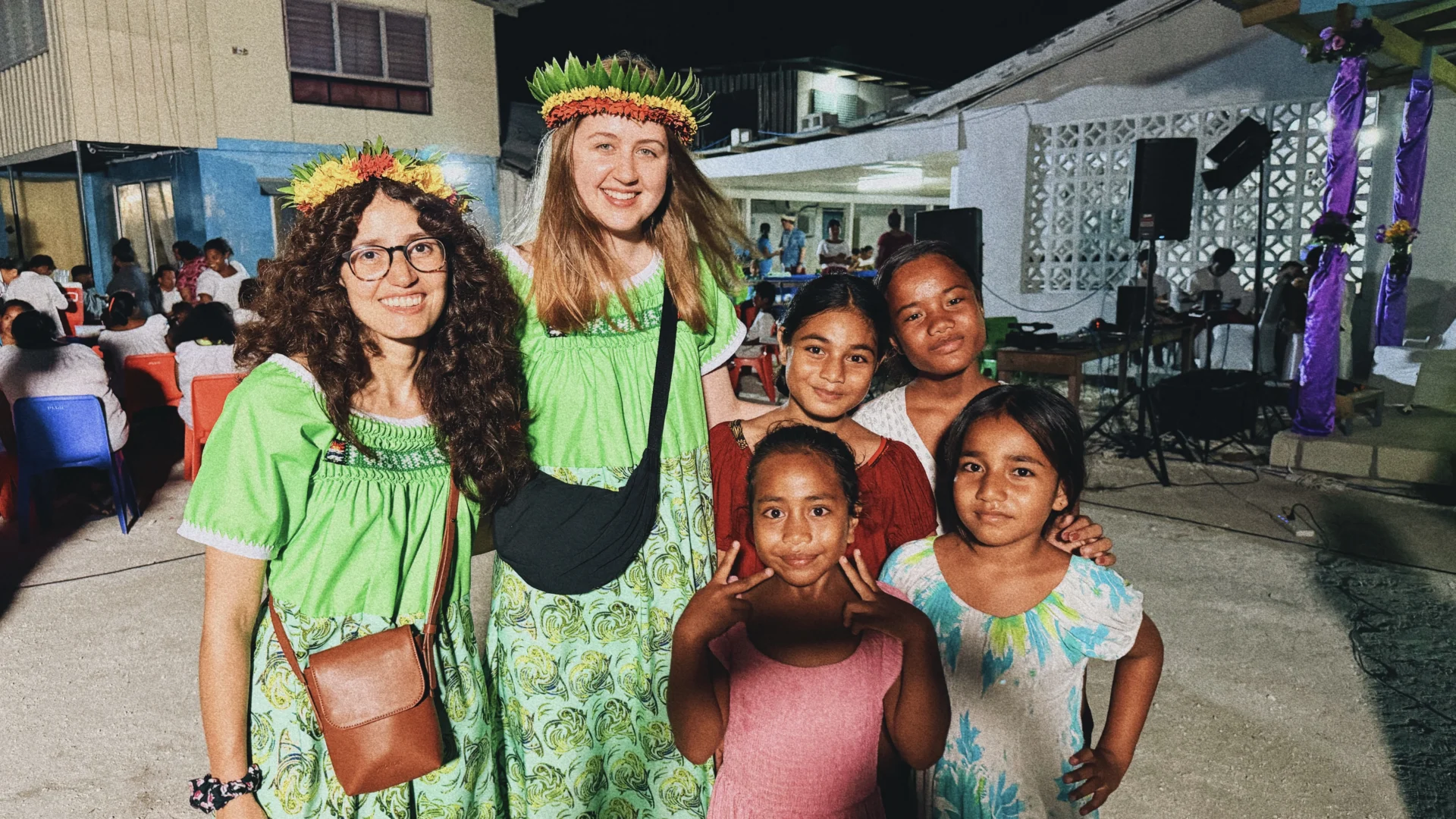
I started writing this editorial while in Kiribati. I was there with two colleagues covering the Kiribati for Christ campaign—or KFC as the locals love to call it. The experience was rather intense. From the moment I stepped off the plane, my whole body was inundated by the heat and humidity.
But as soon as we exited the airport, we were inundated by the warmth of the people. A sea of lovely church members was excitedly waiting for us. After church leaders greeted us at the door, we walked through a Pathfinder corridor with a special choir at the end, singing a welcome song I still hum at least once a day. Pacific Islanders have a way of making visitors feel special, and for us in Kiribati, they went above and beyond.
But why is it? Why were they so excited to welcome us into their country? News of our arrival spread across the whole island, and many were excited to see us come to their churches and meeting sites.
The Mission youth director told us that our presence there was important for the young people because it gave them a better sense that the Seventh-day Adventist Church was not limited to Kiribati. For such an isolated community, there are immeasurable benefits in making the effort of crossing the distance and showing up. And isolated it is.
Kiribati is one of the most remote and scattered countries in the world. To get from the capital, South Tarawa, to the eastern part, Christmas Island, it takes almost five hours by plane. Its 33 atolls and islands are spread across all four hemispheres.
Living on an atoll also brings challenges: There’s barely any land—and the little they have is being threatened by rising sea levels. The soil is sandy, fresh water is limited, almost everything has to come from somewhere else, waste has nowhere obvious to go and infrastructure is limited. Those physical realities then create sanitation, nutrition and health challenges.
Those realities also create challenges—and opportunities—for the Church. Health initiatives are already demonstrating what happens when the Church meets a community need. During KFC, 10,000 Toes health screenings brought hundreds of people to the evangelistic meeting sites, and many of them will continue the follow-up program to improve their health.
Imagine what more could be done. There is incredible potential for sustainability projects—from recycling initiatives to innovative ways of growing fresh food—as well as partnerships and mission groups bringing skills and expertise in areas identified by the local Mission.
There are many communities across our Division that would benefit from more of us showing up. But perhaps we would benefit just as much from going. I know I did. During our time there, I asked the international speakers from Australia, Fiji and French Polynesia what they learned from their experience there and what they will bring home with them.
Their responses highlighted the generosity of the local people, their dedication, commitment and faithfulness despite limited resources—aspects I have also experienced and been inspired by. It’s easy to think of mission in terms of what we can bring—our resources, expertise, programs, funding—but there is plenty to receive as well. I-Kiribati Adventists made me want to be more patient, more willing to serve others, more generous.
It’s been beautiful to see our church uniting through South Pacific for Christ. Many connections were formed with our church family in the Trans Pacific and more will be formed across other parts of the Division as we move forward with this movement. My hope is that those connections don’t end with the campaign.
Where could you show up? What expertise do you have that could meet a genuine need? Who could you partner with? Find an opportunity and go. You may be surprised to discover that mission is just as much about what we receive as what we have to give.
Juliana Muniz is the news editor at Adventist Record.