I’m sure, like me, you can take many lessons from Joseph’s story. There is a lot to unpack in his journey. He is widely remembered as a model of faithfulness, resilience, dedication, forgiveness, honesty and many other Christian attributes.
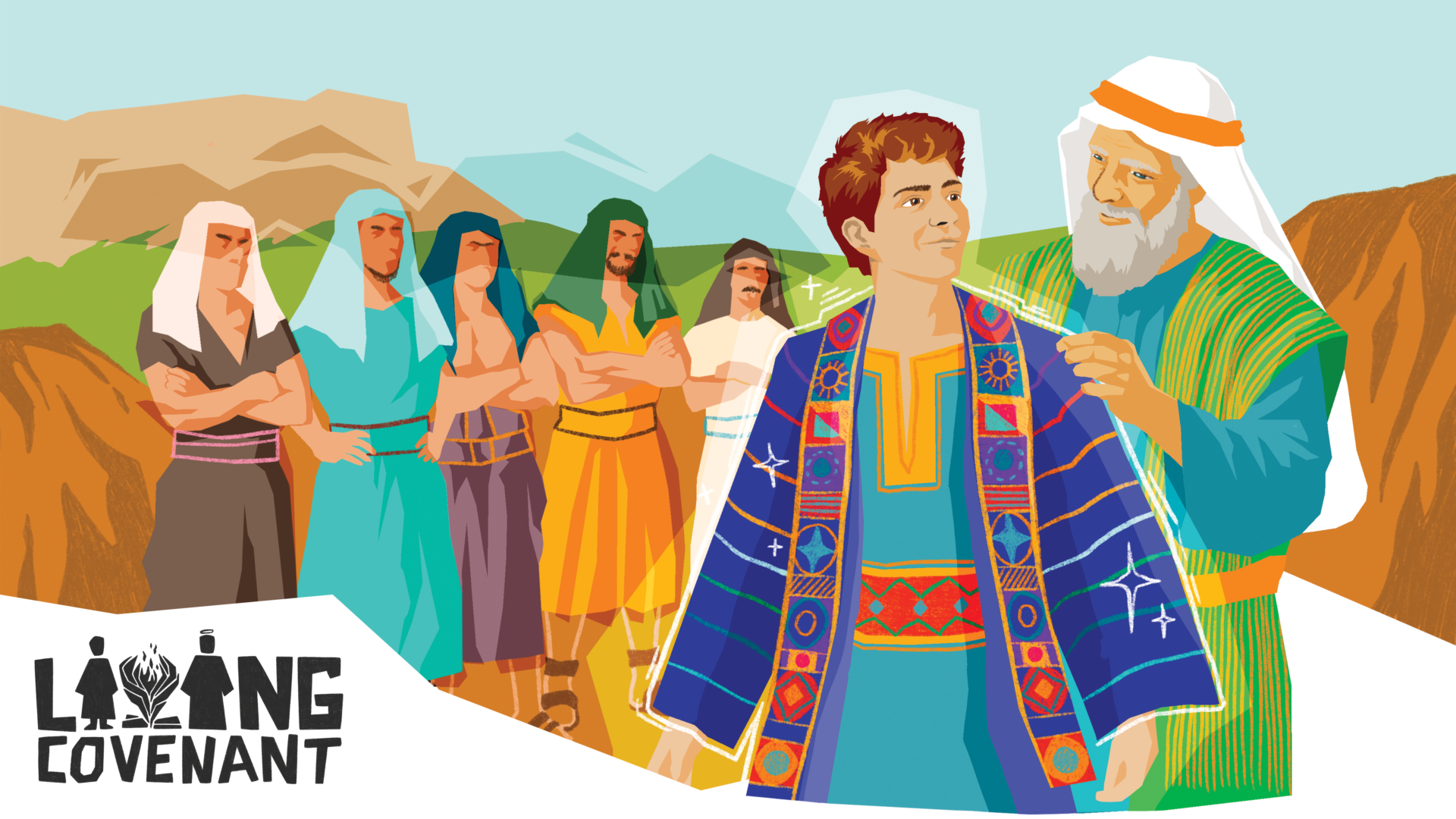
But if we are being honest, before being sold as a slave, Joseph was on the path to becoming somewhat of a brat. He appeared to his brothers as a tall poppy.
Don’t get me wrong, I do admire Joseph, which is why I chose to write about him, and I agree with all the positive attributes I just listed. But it is possible Joseph only became an honourable man because of God’s intervention.
Prolific Adventist writer Ellen White gives us insight into Joseph’s early formation. In Patriarchs and Prophets, she describes Joseph as becoming “self-sufficient and exacting”.
This wasn’t harmless teenage arrogance. Constant affirmation, moral correctness and his father’s partiality were shaping a character that was becoming self-assured in the wrong ways. If left unchecked, the boy who was “right” about many things could easily grow into a man who trusted himself more than he trusted God. And that is a risky place to be for someone meant to carry God’s purposes forward.
I don’t entirely blame him. He was a 17-year-old who was privileged, good-looking, used to special treatment and constant moral affirmation (Genesis 37:3; 39:6).
According to Ellen White, despite his immaturity, Joseph had one great thing in his favour. He grew up with a spiritual foundation. From his childhood, Joseph had been taught to love and fear God. In his father’s tent, he listened to the stories of Jacob’s exile—of a God who met Jacob in vulnerability, made promises and kept them. He learned assuring truths about divine protection, guidance and grace, and he grew up believing not only in God’s power, but in His faithfulness.
And God knew it would be to that foundation he would turn when he found himself stripped away from his family and his freedom, on the way to an unknown land.
“As the caravan journeyed southward toward the borders of Canaan, the boy could discern in the distance the hills among which lay his father’s tents. Bitterly he wept at the thought of that loving father in his loneliness and affliction. . . With a trembling heart he looked forward to the future. What a change in situation—from the tenderly cherished son to the despised and helpless slave! Alone and friendless, what would be his lot in the strange land to which he was going? For a time Joseph gave himself up to uncontrolled grief and terror” (Patriarchs and Prophets 213.1).
I can’t imagine how hard it must’ve been. I used to cry every time I would willingly say a temporary goodbye to my family. Joseph didn’t even get the chance to say goodbye, let alone choose to leave.
But it was in that extremely painful moment that he decided to become the great man generations have learned to admire.
That’s one of my favourite things about Joseph’s story: the fact he made that decision. He drew on his foundation and, despite his character flaws and even his fear in that moment, he resolved to be an absolutely true and faithful follower of God. And God used that to shape him into a great man (Genesis 39:9).
Responsibility came early in my life, and like Joseph, it shaped me in ways comfort never could.
I studied the second half of my primary school years in an Adventist school. I was an only child for a decade and had grown up with a relative sense of stability. That changed suddenly when a new baby sister arrived and my family’s financial situation shifted. We began to struggle. When I got to year six, the school principal told my mum they could no longer allow me to keep my scholarship unless I could contribute in some way. The solution they offered was for me to work at the school. I was given the role of assisting in a preschool classroom, and in exchange, I could remain enrolled. I didn’t want to change schools, so I accepted it.
In Brazil, school does not run for a full day. Older students attend in the morning, while younger children go in the afternoon. So at 11 years old, my days looked like this: school from 7am to 12pm, work at the school from 1pm to 5pm, and twice a week, evening English classes at a separate language school.
While my friends had the entire afternoon to do homework, watch TV, rest and play, I was juggling a lot of responsibilities before I even became a teenager.
Maybe that deprived me of some of my childhood compared to my peers, but it also taught me a few things. I learned early that responsibility mattered and that things don’t come easy in life. I learned how to stand on my own much earlier than most, which prepared me to leave home at 14 for boarding school, to approach university with purpose rather than simply drifting through it, and later to move interstate and then overseas, building a life in places where I knew no-one and had no family around. Carrying responsibility so young did not make any of those transitions easy, but it meant I was not unprepared for them.
Growth doesn’t always unfold gradually. Some seasons are disruptive, demanding more of us than we feel ready to give. Most of us can point to a moment—or a few—that reshaped us. For Joseph, it was that day when he was sold as a slave: “One day’s experience had been the turning point in Joseph’s life. Its terrible calamity had transformed him from a petted child to a man, thoughtful, courageous and self-possessed” (PP 214.1).
It’s comforting to know that, no matter what we’re going through, God always has a plan for us. As painful as some situations in life can be, God can use them to shape us into better people. I am grateful for the hardships I faced in life. I didn’t love facing each of them, but today I look back with a thankful heart because I know that God used them to make me more patient, more empathetic, more flexible, more balanced, grateful for what I have and a living witness of God’s love and care.
For us, too, sometimes God allows circumstances that compress years of growth into a single season. But it’s up to us to decide if we’ll cling onto Him and remain faithful no matter what, or if we’ll give in to despair.
For me, one of the main lessons that remains from the challenges I faced in my life is that no matter where I go or how heavy the load feels, I can be certain that God is with me and inviting Him into my life daily is a commitment that will make all the burdens of this life worth it.
Joseph’s story reminds us that self-sufficiency can quietly stand in the way of what God wants to do in us. But faithfulness creates space for Him to work.
That young man, once described as self-sufficient and exacting, went on to become second in command in Egypt and, through God’s guidance, saved entire nations from famine (Genesis 41:56, 45:5, 50:20).
You might feel you’ll never become someone “important” by the world’s flawed standards. But when you choose to trust God through life’s most painful moments, you allow yourself to be used by Him. And that is the greatest honour we could ever have in this life.
Juliana Muniz is the news editor at Adventist Record.