Jarrod Stackelroth has served as editor of Adventist Record for the past 10 years. During that time, he has created three books from series of articles that have first appeared in the magazine. He talked with Bookshelf about these books and the most recent Living Covenant.
Why have you made these series a feature of Adventist Record over the past few years?
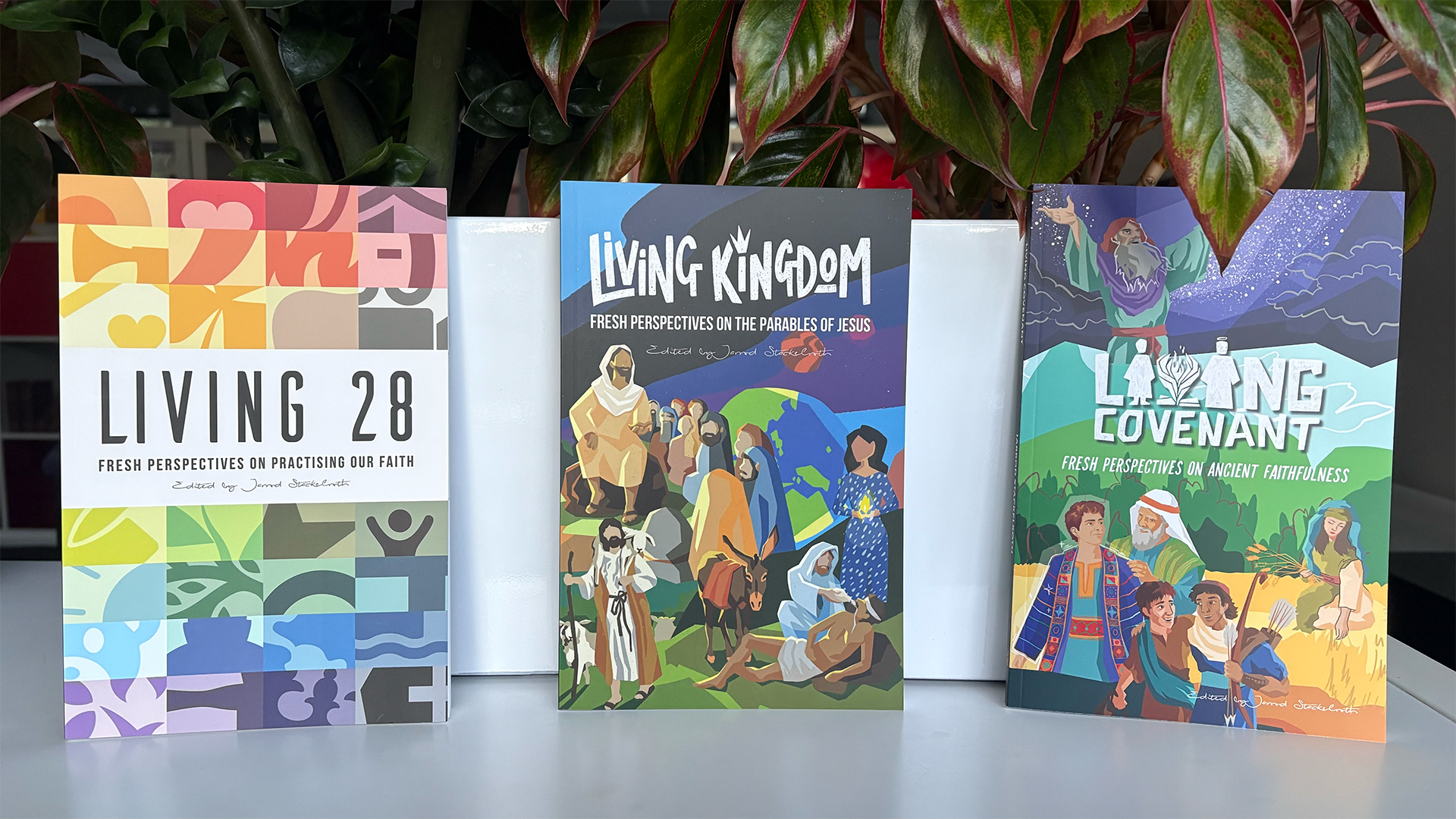
The Living 28, Living Kingdom and now Living Covenant books serve a couple of important purposes. First, the series explores how the beliefs we hold as Christians play out in real life—hence the “living” in the titles. The series explores how we live our beliefs in practical ways. To understand that, we need to understand how our stories are shaped by and impact those beliefs. Stories shape us and can impact others, so a big focus was to get our authors to share part of their personal journey in living out their beliefs.
Why did you choose to focus on characters in the Old Testament in this new series?
The first two series—on the 28 Fundamental Beliefs and the parables of Jesus—were natural starting points but I’ve always loved the stories of the Old Testament and think it is a shame when modern Christians dismiss them as problematic or irrelevant. So it was a natural next step to explore these well-known characters and find out what we can learn from them that applies to our lives.
This book has a stronger representation of young Pacific writers. How did that come about?
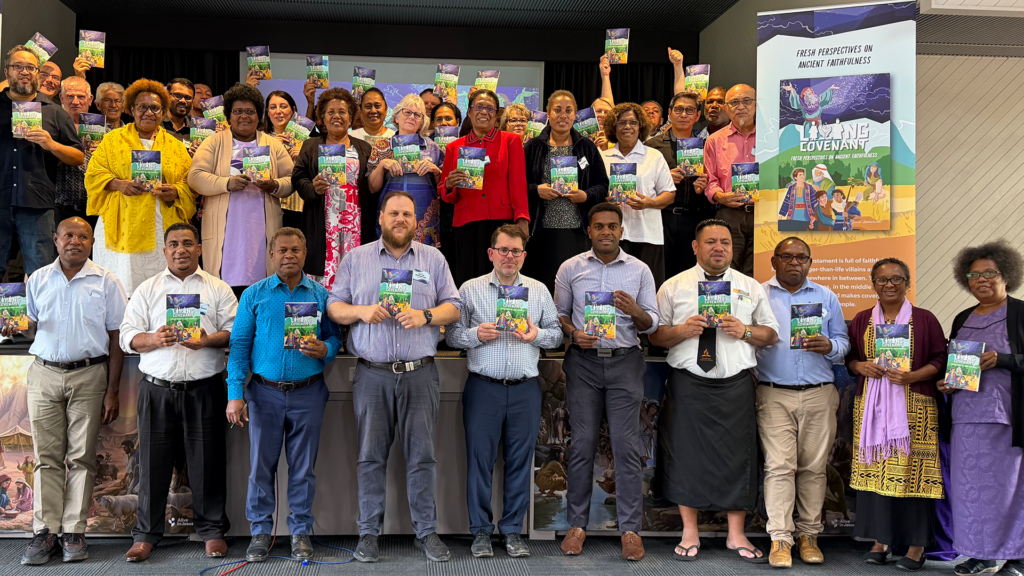
It’s been an important priority of mine to encourage more contributions from the Pacific. A lot of these young people I met teaching writing workshops at Fulton Adventist University. We stayed connected on social media and, when asked, they were keen to contribute.
The whole series had a tag line of “fresh perspectives.” Sometimes young writers can see things in a fresh way that those of us who have been around a bit longer don’t see anymore. We can grow familiar with our beliefs and the Bible stories and we miss the new, life-giving possibilities.
What story did you choose to write on and why?
My chapter was on Elijah. In the early stages of developing this series, I heard a presentation on Elijah that really spoke to where I was at. I was feeling a little burned out and I could relate to Elijah’s “low point” where he feels like his contributions haven’t made a difference and he is fleeing for his life. The Bible has so much wisdom and encouragement for life, and Elijah’s story spoke to me personally at a time I really needed the messages it contained: that God is enough, He has a plan for me and that He can meet my needs.
What does this collection add to the individual articles?
Having them in a book format gives them a longer shelf life. And we’ve added reflection questions at the end of each chapter, to help people go deeper, whether in their personal journaling or in a small-group setting. We love that these books can be used communally.
What can we learn from these ancient stories?
A whole lot. These were people who were broken and imperfect like we are, and that is comforting to me, because if God can use them, He can use us too. Sometimes the cultural gulf can feel too wide but seeing their lives through the lens of our own experience, helps us learn about them and God. When our authors reflect on their lives and stories, as well as their own testimonies, the lessons come thick and fast.
The message of the book is that God’s promises to His people are still relevant today. What He did in these ancient stories, He can do for us. So we also learn about God, His character and His faithfulness, through these ancient stories of His faithful—and sometimes unfaithful—people.
Living Covenant and the other books in this series are available from Adventist bookstores in Australia and New Zealand, or online.