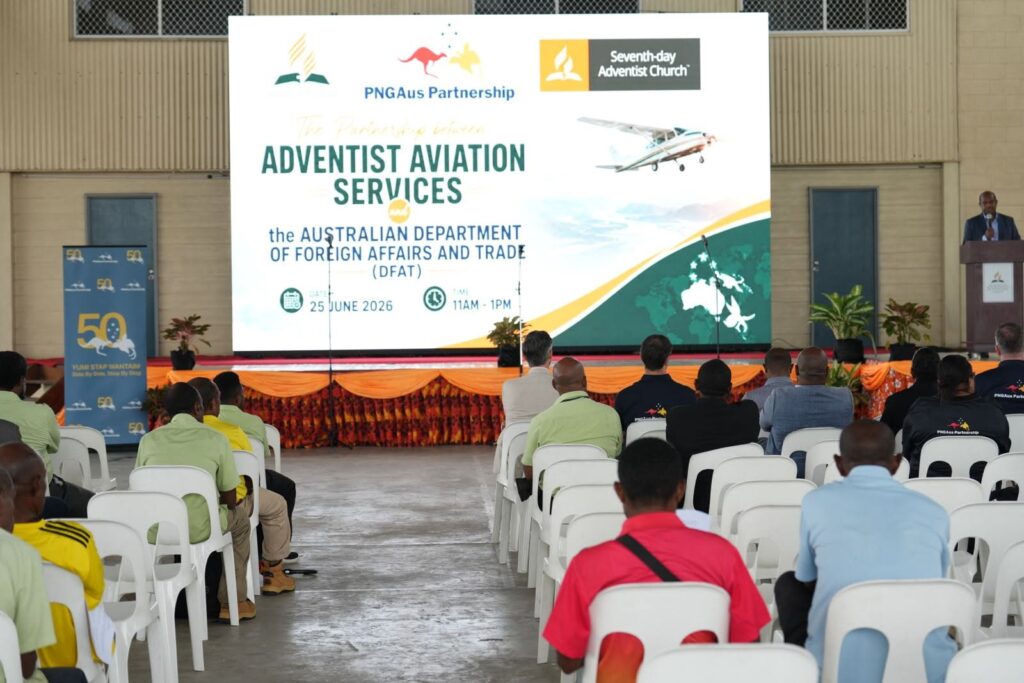
The Australian Government, through its Building Community Engagement Program, has partnered with Adventist Aviation Services (AAS) to strengthen the delivery of life-saving health services, humanitarian aid and essential supplies to some of Papua New Guinea’s most remote communities.
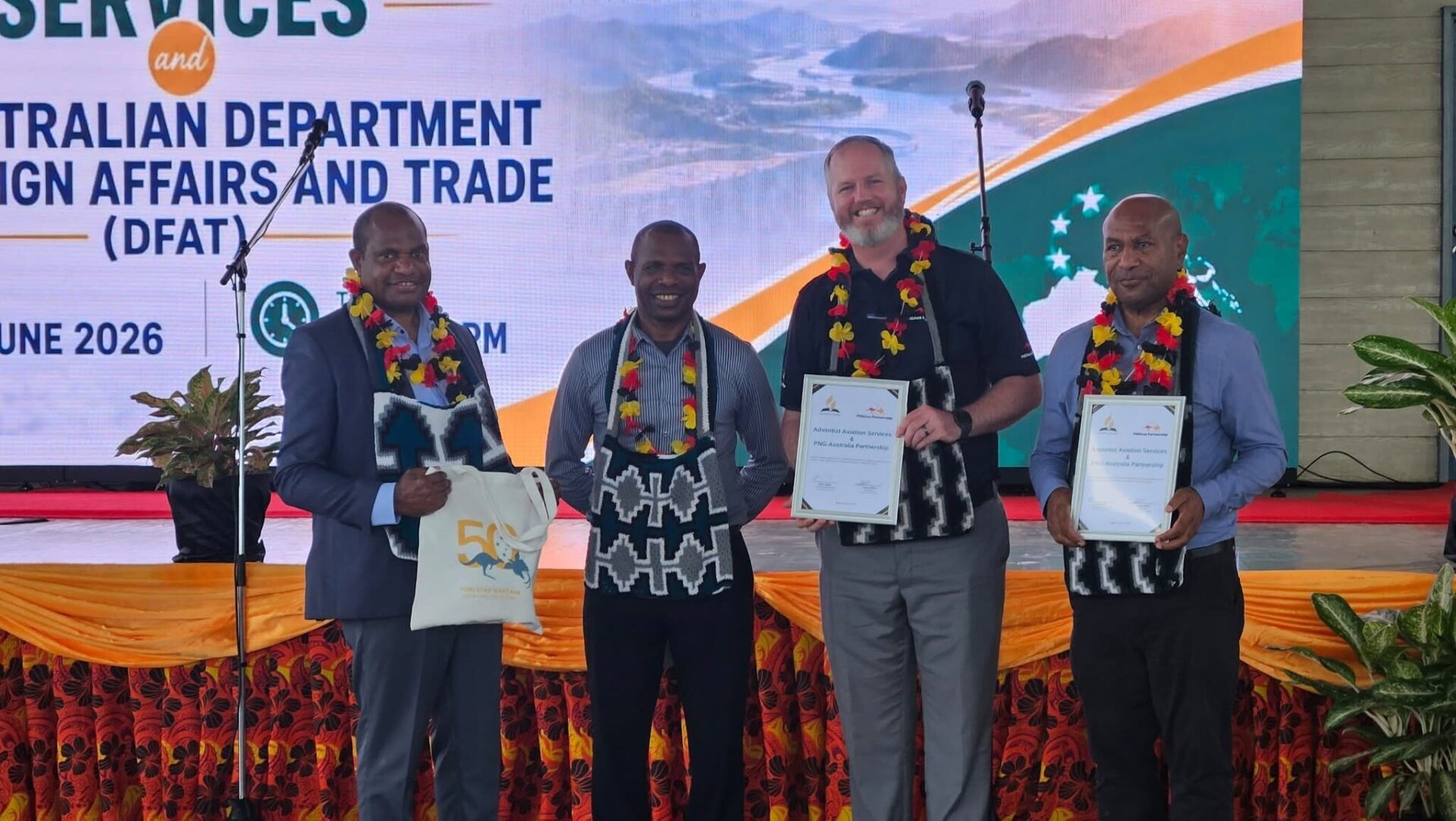
The partnership was officially launched on June 25 in Lae, bringing together representatives from the Australian High Commission, government officials, church leaders and AAS staff.
Among those attending were Australian High Commission counsellor Craig Gillies, Papua New Guinea Union Mission president Pastor Danny Philip, Huon Gulf MP Jason Peter, AAS PNG chief executive officer Captain Mark Neah and representatives from the local church and Lae Adventist community.
For more than 60 years, AAS has served as a vital lifeline for isolated communities where road access is limited or non-existent. Its aircraft provide emergency medical evacuations, transport health workers, deliver humanitarian supplies and carry building materials for schools, health facilities and churches.
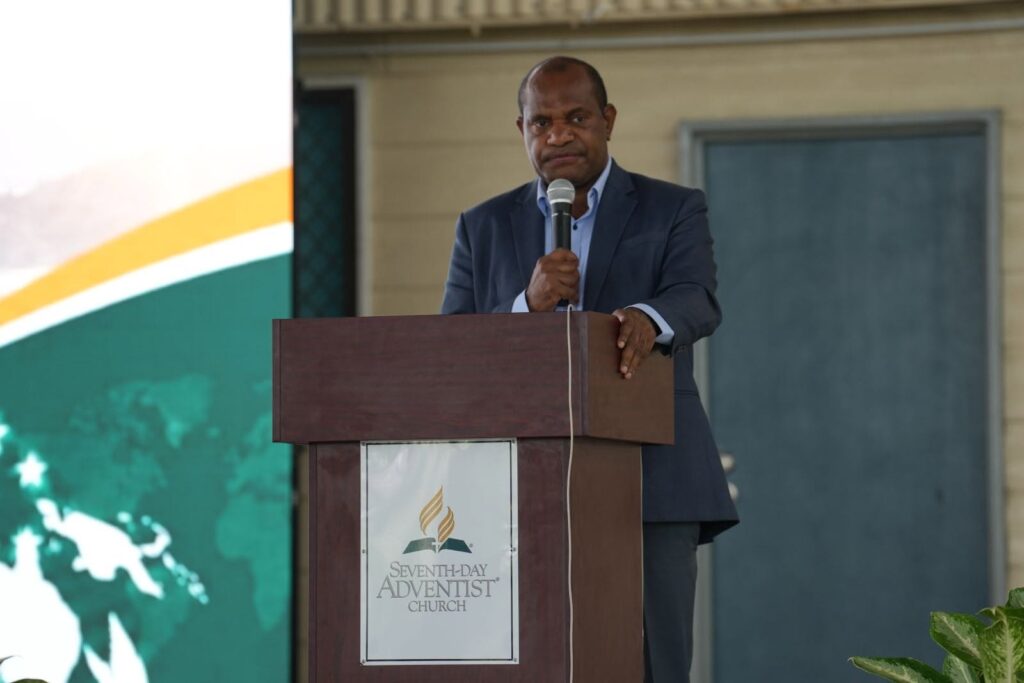
Captain Mark Neah said the partnership would help ensure these essential services continue to reach those who depend on them.
“Australia’s support is helping us keep our planes in the air to reach the most remote communities that rely on our services. This will be the start of a long-term community-building partnership effort,” he said.
The Australian Government’s support will strengthen AAS operations by improving access to aviation fuel, supporting essential staff and helping maintain remote airstrips, enabling flights to continue safely and reliably.
In addition to supporting emergency health services and humanitarian work, the partnership is expected to contribute to rural economic development by improving air links between remote farmers and commercial markets, creating greater opportunities for sustainable livelihoods.
Church leaders welcomed the partnership as a significant step toward strengthening the Church’s mission of serving isolated communities through compassionate, practical initiatives and sustainable development. They said it will “improve the wellbeing of remote communities by expanding access to essential services and bringing hope to those living in some of Papua New Guinea’s most difficult-to-reach regions.”