To be an Old Testament prophet was a perilous calling. Most lived an ascetic life and suffered poverty, abuse and persecution at the hands of both the religious and political establishment. Take Jeremiah, who was thrown into a cistern and left to die of starvation. Or his contemporary Isaiah, who, according to Talmudic tradition, hid in a tree from the evil King Manasseh, who upon discovering the prophet, ordered the tree to be sawn in half with Isaiah still inside. Or Hosea, who is perhaps the subject of the Bible’s most painful object lesson. He is still remembered as the prophet whom God forced to marry Gomer, a serial adulterer—and even when Gomer had multiple affairs, God instructed Hosea to reconcile with her anyway.
However, there was one ancient Israelite prophet whose experience stands apart. I am, of course, talking about Jonah.
Jonah fails most of the markings of a good prophet. He is petulant, prejudiced, dishonest and wilfully ignorant of both God’s will and His character. To make matters worse, Jonah isn’t smart or self-aware—by all accounts, he’s a fool. And yet, surprisingly, he seems to be one of God’s favourite fools.
The Bible itself tells us very little about the historical Jonah. We know he lived in the eighth century BC and that his story was probably written at least two centuries after the events depicted. Outside the book of Jonah, he’s only mentioned in 2 Kings 14:23–25 where he blesses Jeroboam II’s campaign to expand Israel’s territory. It’s likely Jonah is the protagonist of this story as he represents a ringing endorsement of Israelite nationalism and lived at a time when (arguably) Israel was at its economic peak.
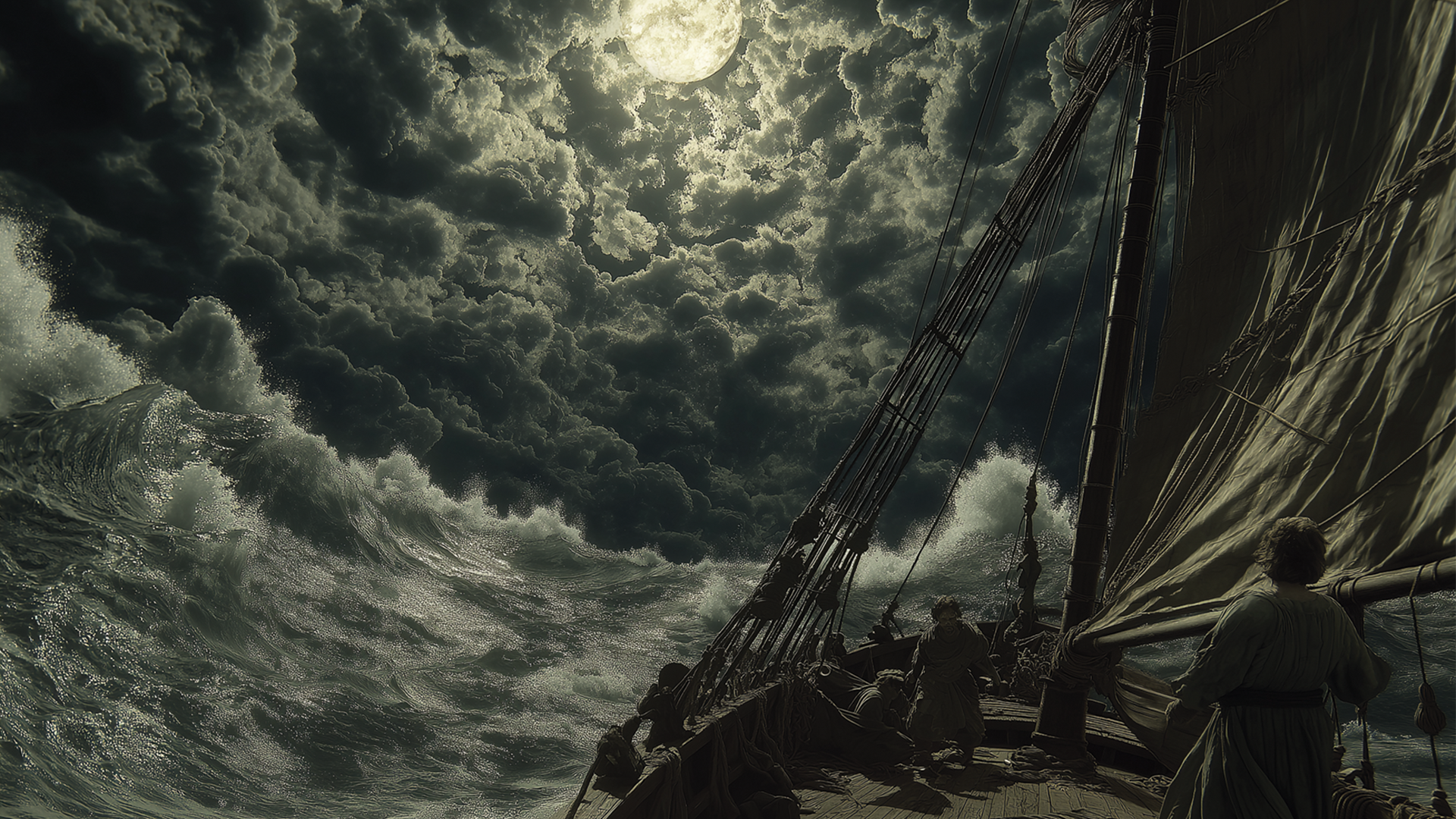
The actual story of Jonah is one familiar to most people, even if you’ve only heard it in passing. Jonah the prophet is instructed by God to preach to the city of Nineveh that because of the people’s evil, God is going to destroy them. Jonah runs away, is caught in a storm and is ultimately thrown overboard. God then sends a giant fish that swallows Jonah. After three days, the fish vomits Jonah up on shore, whereupon he decides to go to Nineveh after all. The city, having received the message from God, repents en masse and God relents from destroying it—and everyone gets a happy ending. Right?
Well, sort of.
The story, though simple on the surface, is one of the most thematically and literarily complex stories in the Old Testament. It isn’t like the historical prose we see in the other prophets, so we shouldn’t read it like we would Amos or Isaiah. As literary critic Harold Bloom pointed out, Jonah “should be with the Writings—Song of Songs, Job, [Ecclesiastes]—because it too is a literary sublimity, almost the archetypal parable masking as short story”.1
We open with God’s command to Jonah to “go to the great city of Nineveh and preach against it . . .” (Jonah 1:2). Already we have a strange turn of phrase, “because its wickedness has come up before me”. This is the first clue that we should pay attention to the words, as the repeated patterns of words and phrases point to non-obvious meaning in the story. For instance, the themes of “going down” and “coming up” feature prominently. When he runs away from God, Jonah goes down to Joppa (1:3); when the storm comes up (1:4) Jonah has already gone down below deck (1:5). It is Jonah, not the sailors who instigate throwing him overboard and once again, he is hurled “into the depths, into the very heart of the sea” (2:3). Jonah blames God, even though he really has no-one else to blame but himself. Nevertheless, Jonah’s prayers “rise up” to God’s holy temple (2:7) and he likewise praises God for “bringing his life up” from the pit.
There are many other examples of wordplay and repetition, such as the author’s use of the word “big”, which occurs 13 times or “perish”, which occurs four times. As well, other words are repeated, like “bad”, “to call”, “decree” and others. What should be clear is that the author chose specific word repetitions for a reason.
What is also surprising about Jonah are its moments of levity. For example, when the sailors cry out to God not to punish them for “spilling an innocent man’s blood”, the word for “innocent”, naqî, is spelled out remarkably similarly to the Hebrew phrase wayyāqê, meaning “vomited”—foreshadowing Jonah’s fate.2 Similarly, the plant that later shades Jonah is described as a qîqāyôn—which, spoken out-loud, sounds like “the vomiting of Jonah”.3 Then there’s the fact that Jonah’s name Yownah sounds suspiciously like Ninevah, or nînәwêh. To be clear, the author of Jonah could have used other words—but chose not to. When read in ancient Hebrew, the story of Jonah sounds like a poem or limerick.
But Jonah isn’t just interesting linguistically. Thematically, its structure follows the hero’s journey—but subverts it. The theme of the reluctant prophet is not unique to Jonah. But whereas other prophets eventually embrace their role, Jonah resists. We’re not given any indication he will ever confront his prejudices nor that he will ever submit to God’s will. “Jonah’s deviation from the classic hero’s journey transforms him into an antihero—one who resists change rather than embraces it.”4 Jonah expresses casual indifference toward the sailors and repugnance toward the Ninevites. Ironically, it is these characters who act more heroically than the prophet. The sailors cry out to God, humbling themselves, as does the king of Nineveh and all his subjects. By contrast, Jonah flip-flops between insufferable arrogance and crippling anxiety. After he succeeds in his quest to preach to Nineveh, they all repent, and outraged, Jonah waits outside the city, hoping God will change His mind and smite the Ninevites after all. In the meantime, God makes a plant grow over Jonah to give him shade—then sends a worm to eat it. Jonah is devastated. “He wanted to die, and said, ‘It would be better for me to die than to live’” (Jonah 4:8). God is quick to point out Jonah’s hypocrisy. “You have been concerned about this plant, though you did not tend it or make it grow. It sprang up overnight and died overnight. And should I not have concern for the great city of Nineveh,” God says, “in which there are more than a hundred and twenty thousand people who cannot tell their right hand from their left—and also many animals?” (Jonah 4:10,11).
And so, the story ends. Jonah is afforded no opportunity of reply and we, the readers, are left somewhat bewildered, wondering what it was all about.
So, how should we think of Jonah? Is it simply a window into time, a cultural critique of an era long past? Must we whittle it down until only the most basic of moral lessons remain, suitable only for Veggie Tales? As I’m sure you’ve noticed, there’s so much more to the story.
We should first consider the time when Jonah was written. During the exilic period, stories like Jonah would have served to challenge Judahite attitudes toward their neighbours. Many Jews would have looked down upon foreign nations and the Ninevites would have served as an easy stand-in for the Babylonians, the Persians or indeed, any power that both threatened military oppression and religious/moral perversion. And yet, it’s these pagans who respond as you’d expect a prophet to, and the prophet responds as you’d expect a pagan to.
In case you were still wondering, Jonah is not the hero of our story. He embodies all the worst qualities of nationalism—arrogant elitism towards pagans, while at the same time painfully ignorant to the irony of having been conquered by them. It is these pagans who embrace God and in the same way, God embraces them—just as He embraces the ever-resistant, cantankerous prophet. Jonah is also a story of human stubbornness and divine mercy—of “a prophet who runs from his calling, only to find that God’s will cannot be escaped”.5 Jonah demonstrates that we cannot be trusted to determine the boundary lines of God’s favour, or which peoples and groups are deserving of His compassion—or wrath. The sailors and Ninevites alike act as a foil to Jonah’s (and our) expectations, to remind us that those we assume are hostile to God may actually respond to Him, if given the chance—and that God may in turn love them too, if given the chance.
As scholar Tim Mackie points out, the actual focus of the book of Jonah is you. Can you accept a God who loves your enemies as much as He loves you? Are you willing to worship a God who forgives and embraces those you don’t think are deserving of His love? Are you willing to let go of your notions of political, religious or cultural exceptionalism and submit to God’s more challenging standards? “This book holds up a mirror to the one who reads it. In Jonah we see the worst parts of our own character magnified—which should generate humility and gratitude that God would love His enemies and put up with the Jonah in all of us.”6 The truth is, sometimes we are a Ninevite and sometimes we are Jonah. Thank goodness God’s grace is big enough to love us regardless of whether we’re a heathen or God’s favourite fool.
- <nybooks.com/online/2011/07/28/harold-bloom-jonah-my-favorite-book-bible/>.
- Baruch Halpern and Richard Friedman, “Composition and Paranomasia in the book of Jonah.” York University, University of California, San Diego.
- Ibid.
- Robert Justin Harkins, “Jonah and the prophetic character”. 2010.
- Ibid.
- <youtube.com/watch?v=dLIabZc0O4c&ab_channel=BibleProject>.
Jesse Herford is the associate editor for Signs of the Times.