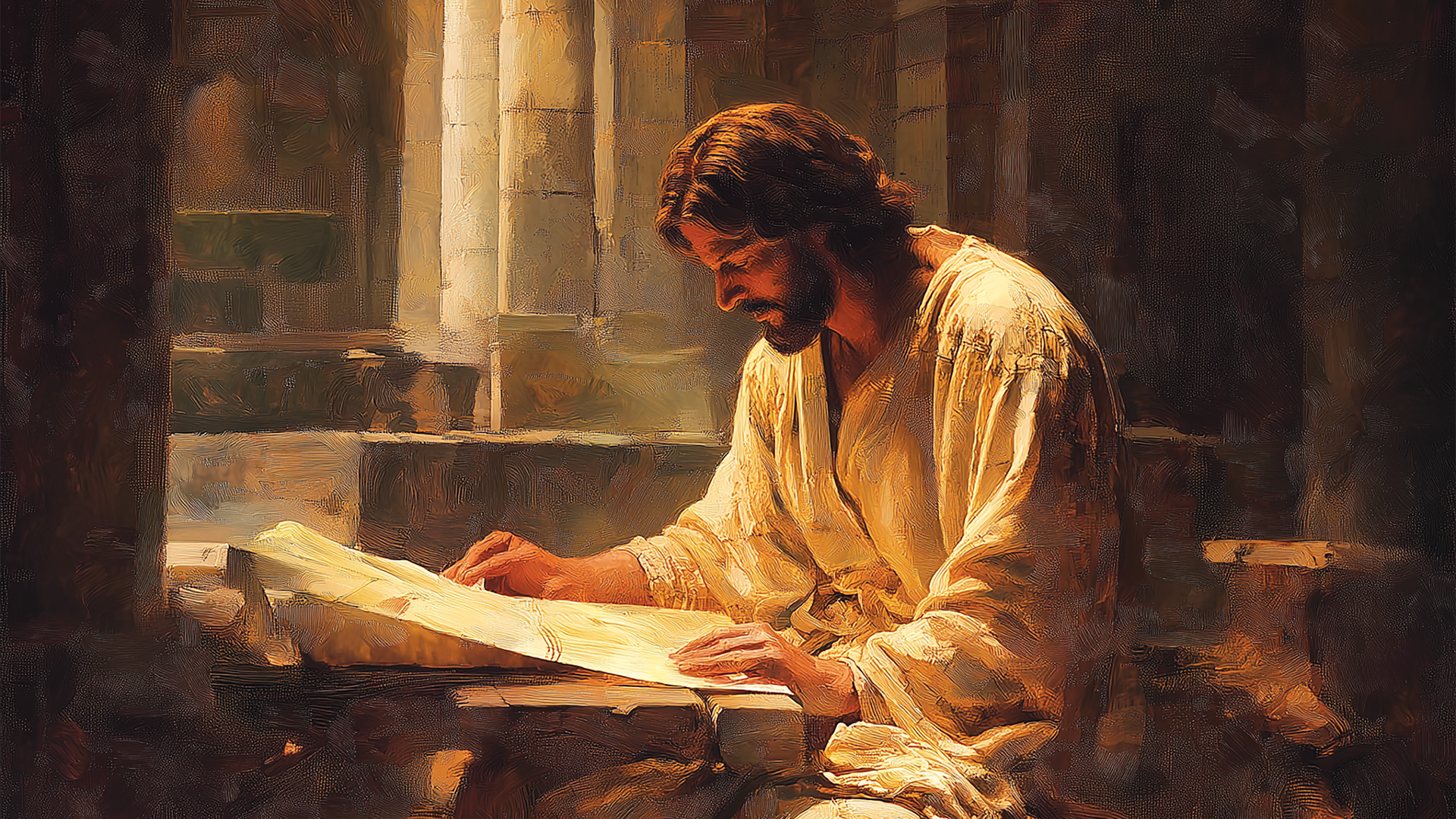
When Jesus returned to His home town of Nazareth after His baptism, He gave His first recorded public sermon. He had already earned a reputation as a synagogue speaker who “was praised by everyone” (Luke 4:15), so it is likely His family, friends and community were waiting for His return with great anticipation. And He took the opportunity to make a dramatic announcement.
Whether it was the reading for the day or a passage that Jesus specifically sought out, He read from the scroll of Isaiah, using language drawn from the Hebrew tradition of Jubilee as part of the Sabbath-shaped life that God had designed for them. He announced good news to the poor, freedom for the captive, liberation for the oppressed and healing for the blind. These were specific things He would enact in His practical ministry (see Luke 7:22), but He was also using language that His boyhood neighbours and family members gathered that Sabbath recognised. He was announcing that the great Jubilee had come, wrongs would be set right, liberation was on its way and the Messiah had come.
There was probably an expectant hush as Jesus rolled up the scroll, returned it to the synagogue attendant and sat down. “The Scripture you’ve just heard has been fulfilled this very day!” He said (Luke 4:21).
The congregation was buzzing. They recognised the remarkable proclamation He was making—and from a local boy, no less. They were ready to stand and cheer.
But Jesus’ sermon—brief though the record of it is—was not finished. Jesus did not seem to trust their enthusiasm and as He continued, the crowd turned.
In effect, He told them that this liberation, healing and redemption was not exclusively for them. Drawing on two stories from the Hebrew scriptures—the widow of Zarephath and the healing of Naaman (see Luke 4:25–27)—He pointed out that God’s plans and actions often included and welcomed those outside the stories, people and promises that they assumed.
Again, the people heard what Jesus was saying. They were so angry that they mobbed Him and dragged Him to the nearby hilltop, trying to throw Him over the cliff (see verses 28,29).
That was quite a Sabbath, a sermon the people of Nazareth would not soon forget. But remarkably, Jesus’ announcement of Jubilee and Messiah was overshadowed by their anger at His inclusion of the foreigner and the stranger in this moment of national triumph. Unfathomably, the jubilant proclamation that God was with them and for them—“that the time of the Lord’s favour has come” (Luke 4:19)—was eclipsed by their discomfort, even anger, that God was also concerned for the strangers and foreigners.
But these outsiders were there all along. Yes, this Sabbath-shape was embedded in creation as a pattern for all humanity, but the Sabbath commandment itself made it explicit. As the most detailed of the commandments given to Moses, the fourth commandment directed those who would “remember” to also remember and share its benefits with “any foreigners living among you” (Exodus 20:10). In short, Sabbath-keepers will be those who look out for and include the strangers and the foreigners.
It was a pattern that would be repeated in another passage from the prophet Isaiah. While affirming the importance of honouring the laws of God and drawing the people back to celebrating Sabbath, the prophet pointed the people to the “kind of fasting” that God would like to see (see Isaiah 58:6–10): to set free those who are wrongly imprisoned, “let the oppressed go free and remove the chains that bind people . . . Feed the hungry and help those in trouble.”
Like the commandment, both this ancient Hebrew prophet and various commentators on his proclamation link concern for those most in need of help and liberation with attention to the Sabbath. This is one reason it has been suggested that Isaiah 58 might be the Bible passage most referenced in the writings of Ellen White. She pointed out that “the prophet is addressing Sabbath-keepers, not sinners, not unbelievers, but those who make great pretensions to godliness. It is not the abundance of your meetings that God accepts. It is not the numerous prayers, but the rightdoing, doing the right thing and at the right time. It is to be less self-caring and more benevolent. Our souls must expand. . . . With the work of advocating the commandments of God and repairing the breach that has been made in the law of God, we are to mingle compassion for suffering humanity” (Welfare Ministry, pages 28, 32).
Pulling these biblical threads together—and others that could be woven in—those who seek to remember the Sabbath must also remember “any foreigners living among you”. Sabbath keeping should not be a religious observance “to please yourselves” (Isaiah 58:3)—compare, not “pursu[ing] your own interests on that day” in verse 13. Rather, the kind of religious observance God is most interested in and honoured by is that described by Isaiah’s urgent call to justice, liberation and generosity (verses 6–10).
We live in a time when the foreigners living among us—and even those who are not particularly foreign, but who look different, worship differently or speak differently—are being targeting by populist politics, anti-immigration protest movements and specific government policies in different nations around the world. But there is a special imperative on those who seek to worship God and remember the Sabbath to respond differently: to speak up, stand up and act on behalf of those who perhaps even the majority in some nations are seeking to attack and exclude.
The biblical call to “do justice” was never merely about noble sentiments, good intentions or nice sermons. Rather, “our souls must expand”. The experience of Jesus that morning in Nazareth shows that taking this call seriously will confront people’s power, position, policies and prejudices—even those of our family, friends, fellow citizens and political leaders. That might well make people angry. It put Jesus’ life in danger right at the beginning of His ministry—even among His hometown crowd.
But in our world today, this might be one of the ways that we can best demonstrate—as Jesus would put it in another Sabbath-day confrontation—that “the Sabbath was made to meet the needs of people, and not people to meet the requirements of the Sabbath” (Mark 2:27, NLT). Including the foreigners living among us.
Nathan Brown is the book editor at Signs Publishing.