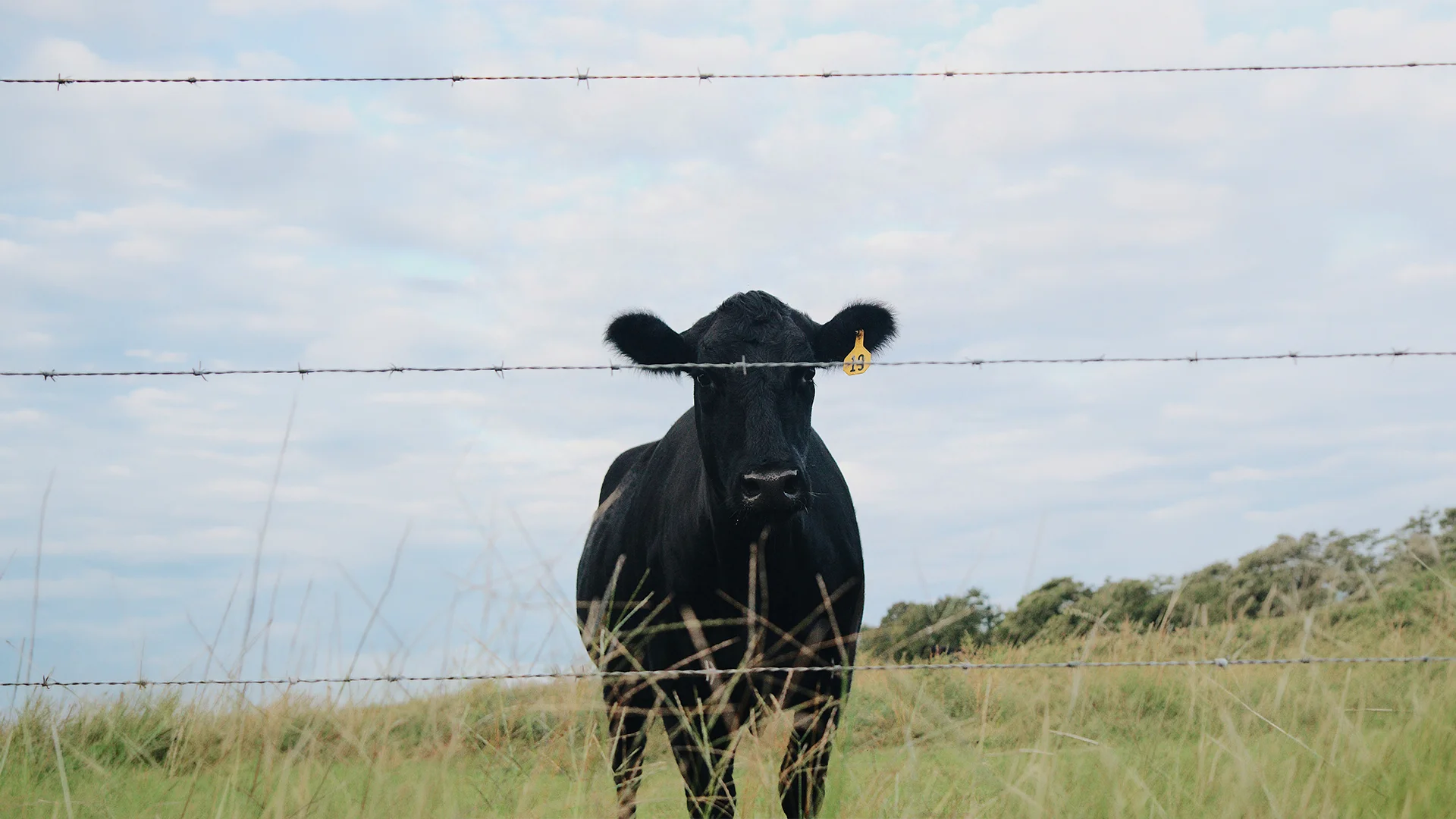
Barbed wire—it’s something I am all too familiar with having grown up in a rural environment.
In my many outdoor adventures growing up with my brothers and their friends (there were no girls my age in my neighbourhood until I was about 12), I encountered barbed wire a lot. We also had to navigate barbed wire while mushroom picking as a family across the paddocks surrounding our house. Usually there were gates we could open but some of these were loosely termed gates made by the local farmer—a mix of Number 8 Wire with barbed wire running across the top and middle—and were likely to collapse as you released the catch. If you weren’t careful and were standing in the wrong place, you could get caught up in the spiky nest.
Our back fence had barbed wire and sometimes an electric fence as well due to the cow paddock behind us. I can remember clearly getting a boot from the electric fence because I touched a branch from our back hedge that was touching the electric fence. Somehow, the current went directly through the branch to me. After we moved to a property with acreage, my dad often had cows in one of our paddocks and would sometimes strip graze them. This meant we had to navigate the electric fence to get across the paddock to the shed and gardens.
One crucial time the electric fence didn’t work was when our local church had a plot of capsicums growing in one of Dad’s paddocks as a fundraiser for the new church building. The cows were so determined to get to those tasty capsicums that they bulldozed down the electric fence and bolted in to enjoy the treats, eating the lot. Needless to say, the church didn’t use Dad’s paddocks for their fundraiser growing after that.
Back to the barbed wire. Have you ever experienced that feeling when you are trying to climb through or over a barbed wire fence and almost making it through the narrow spiky gap unscathed, when one of the barbs catches you on the back of your shirt or pants just out of your reach to unhook yourself? You don’t know whether to go backwards or forwards, but you do know if you move you will likely hook yourself further, or worse, the barb catches your flesh in a meaty grab. Ouch—I have—multiple times!
But isn’t that its purpose? To catch you, or a curious animal that doesn’t know better, or to stop you when you think you know better, but really don’t, from progressing further than you should. It’s a boundary, a dividing line, a safeguard, a protector of sorts. A little fear or pain as a small warning that there could be something more dangerous lurking on the other side.
Most of the time, the biggest danger we encountered on our childhood adventures was the fence itself. I do recall though, being chased by an angry mare across a nearby paddock when I attempted to go and pat her newborn foal. I have never run so fast in my life. I didn’t wait to undo the gate to get to safety. I vaulted it with that angry mama horse hot on my heels. I have had a healthy respect for horses ever since.
As children, when we got ourselves into difficulty with the barbed wire, we would call out for a saviour to unhook us. In my case, it was usually in the form of my big, strong dad. Or, if Dad wasn’t present, my older brother who was taller than me and had learned how to climb across the fence safely.
Most of the animals in my childhood wanderings across barbed wire-laced paddocks were cows who weren’t very clever—albeit stubborn and curious. On the odd occasion, we also encountered sheep who were no different. Which is why I believe that we are likened to sheep a lot throughout the Bible. We all need barbed wire fences as boundaries to protect us from ourselves. Little warnings that something might not be good for us or others, to stop us in our tracks.
God in His loving wisdom has given us plenty of practical examples of boundaries in the Bible. These apply to many areas of life, including relationships, raising children, marriage and health, to name a few. Most lead us directly to a loving relationship with Him. But in that same loving wisdom He gives us free choice. Choice to make the decision as to whether we are going to try and climb those fences, despite the barbs of consequences, or whether we are going to trust Him and stay where we need to be. With this freedom of choice comes a warning: “You, my brothers and sisters, were called to be free. But do not use your freedom to indulge the flesh; rather, serve one another humbly in love” (Galatians 5:13,14). It is important that we recognise those barbs on the fences as the warning that they are. Sometimes breaching them hurts.
God, when He was desperately trying to reach Israel to bring them back to Him, said in Hosea 2:6, “Therefore I will block her path with thornbushes; I will wall her in so that she cannot find her way.” God let Israel experience the spikes of hardship to hinder their wilful, destructive behaviours. The thorny wall of affliction protected them from straying further into sin so they would call on God and return to a faithful relationship with Him.
Life’s fences, whether they have barbed wire, are laced with electricity or are covered with ivy, can be teachers that help us develop and fortify our trust in Jesus, ensuring we stay on the path that He has set before us.
Choose today to see the barbed wire fence not as a symbol of hurt, pain and discouragement but as a hedge of protection guarding your soul.
“Trust in the Lord with all your heart and lean not on your own understanding; in all your ways submit to Him, and He will make your paths straight” (Proverbs 3:5,6).
Wendy Hunter works in the People and Culture team at Adventist Senior Living and attends Lakeside church in Bonnells Bay, NSW. She writes as a way of pausing to notice and remember the God moments woven through ordinary days.