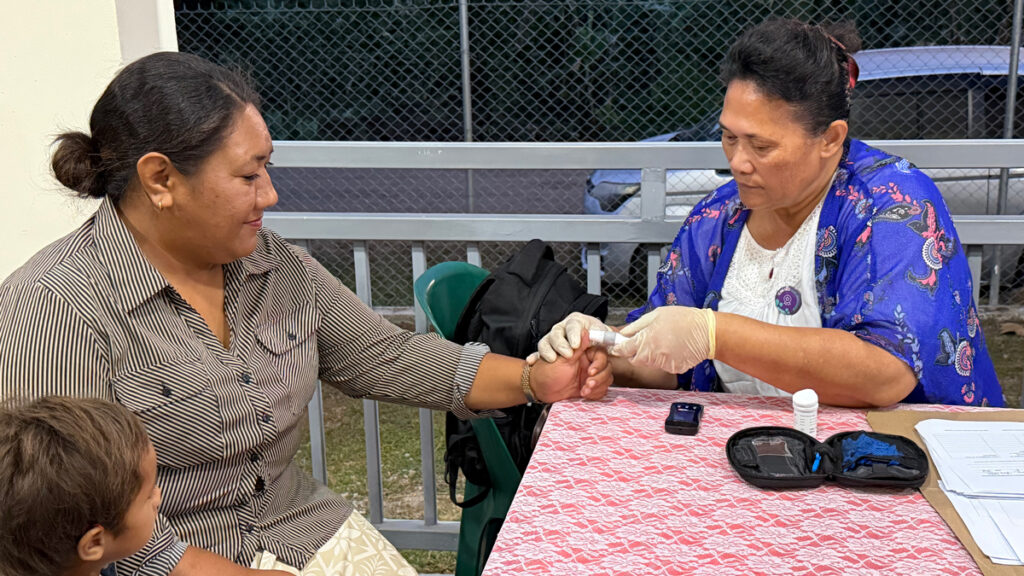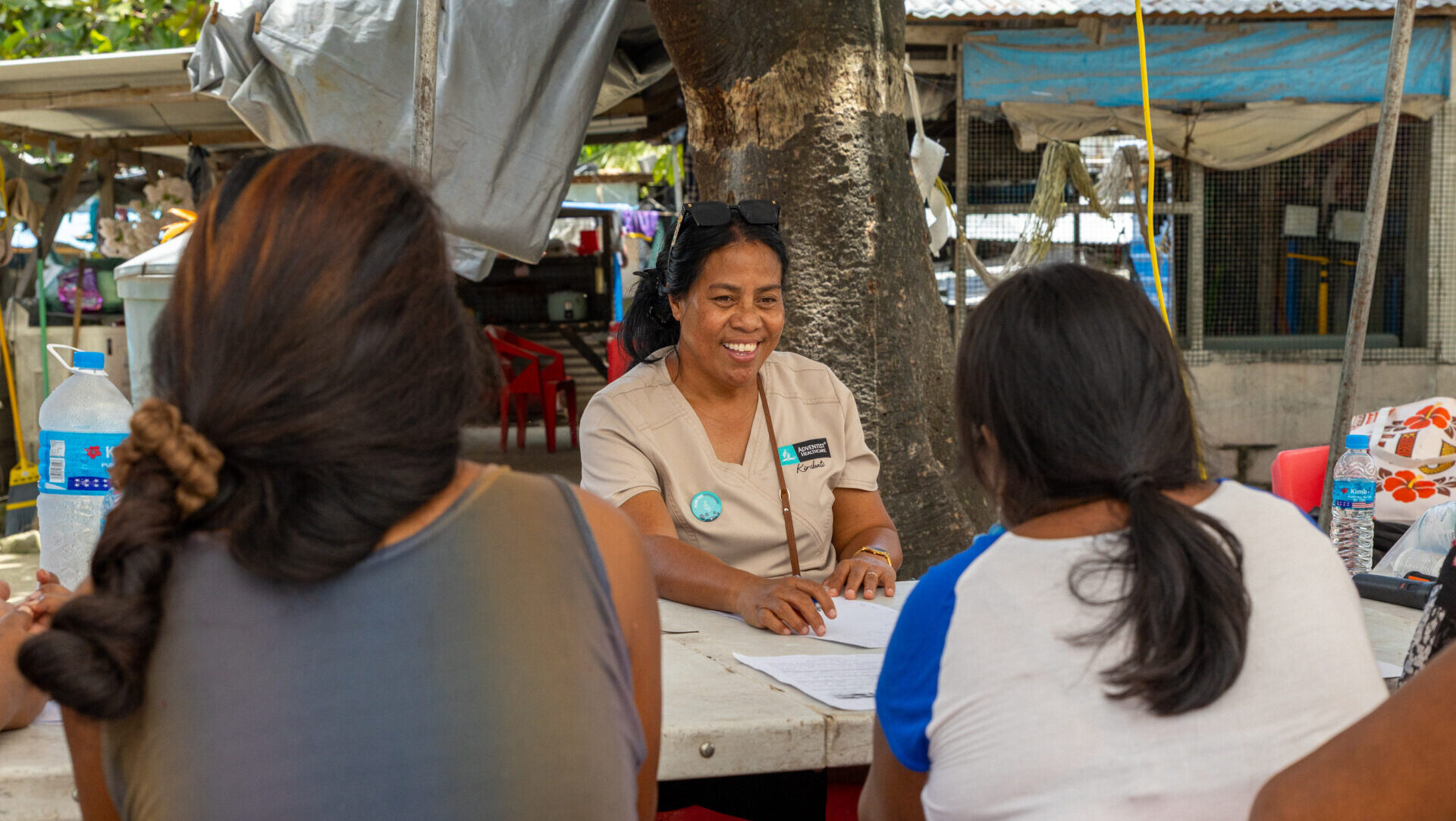
Health screenings conducted by the 10,000 Toes campaign during the first phase of Kiribati for Christ brought preventive health services into local communities while identifying dozens of people for ongoing support to reduce their risk of non-communicable diseases.
More than 200 people were screened across five campaign sites, with nearly 50 registering for a 12-week Step Up to Wellness program planned as a follow-up to the screenings.
Kiribati Mission president Pastor Taabua Rokeatau said health awareness was a key part of Kiribati for Christ, with 10,000 Toes health initiatives incorporated across campaign sites.
“10,000 Toes is one of the major programs for all the sites,” he said.
Kiribati Mission health director Teera Katarake said the screenings were particularly important in a country where non-communicable diseases (NCDs) are a significant concern and accessing the main hospital can be difficult for people in some communities.
The screenings included health assessments followed by individual consultations, where participants received an explanation of their results and advice on reducing identified health risks.
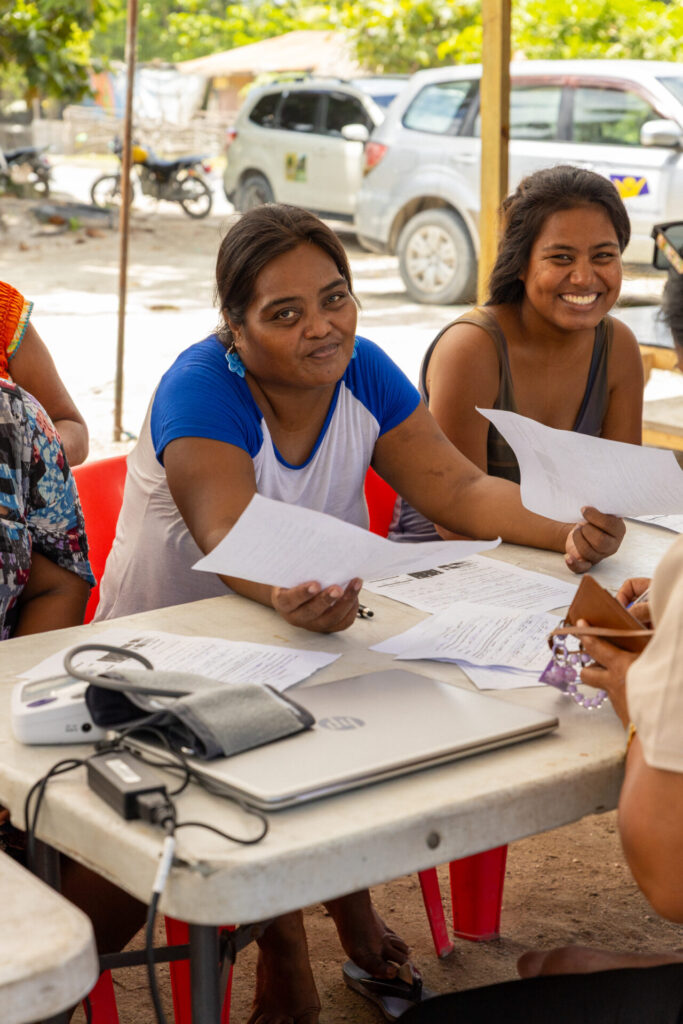
Community member Tutana Kareaiti said the screening gave her an opportunity to learn more about her health in an environment where she felt comfortable.
“I want to understand what is happening in my body and whether I have any diseases,” she said. “I am too shy to go to the hospital or talk to the doctor about the problems in my body. That is why I like to come and join this health screening.”
A registered nurse and midwife who previously worked in Kiribati’s hospital system, Mrs Katarake said obesity and other NCD risk factors were among the main concerns identified through the screenings. She also expressed concern about the number of diabetes-related amputations she had observed.
Mrs Katarake said reluctance to seek screening was not uncommon, with some people concerned about others knowing about their health conditions. Community-based screenings provided a more accessible setting where participants were assured their information would remain confidential.
“For me and my team of health ambassadors, our aim is to help them decrease their risk of non-communicable diseases,” she said.
The health support initiated during Kiribati for Christ is continuing beyond the first phase of the campaign. The nearly 50 people who registered for Step Up to Wellness will be going through a 12-week lifestyle program designed to support people at higher risk to make sustainable changes.
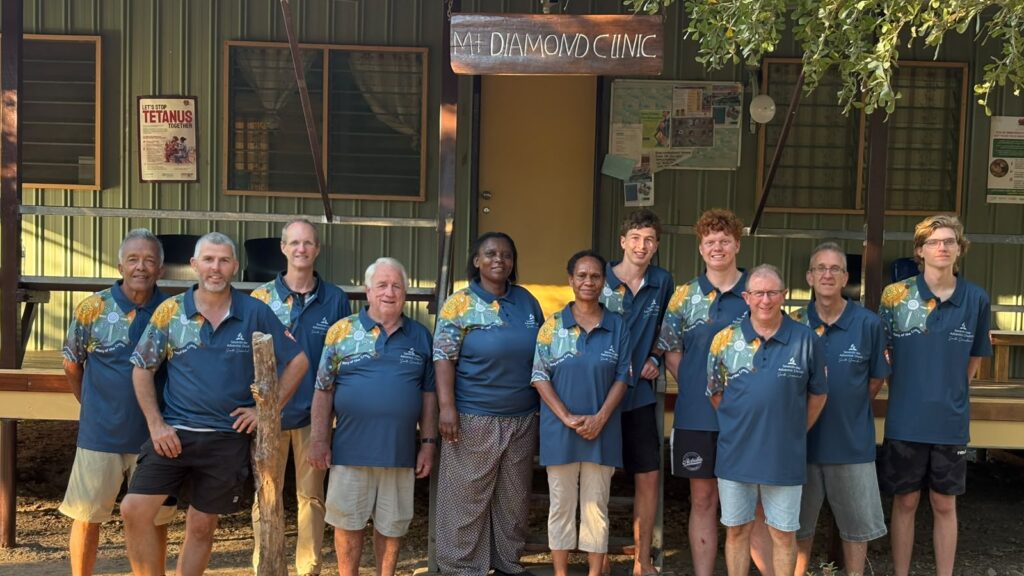
The Mission has also been adapting the program to local conditions. Mrs Katarake said recipes originally provided for Step Up to Wellness included ingredients that were difficult to source in Kiribati, prompting her to work with the Trans Pacific Union Mission 10,000 Toes team to develop alternatives using foods available locally.
“When they sent the revised recipes, it was easier for us to follow them because the ingredients are easy to find in shops or at local markets,” she said.
Follow-up is also conducted through group chats established during community screenings, allowing participants to ask questions and remain connected with the health team.
While more than 100 health ambassadors have been trained in Kiribati, Mrs Katarake said many are no longer active or have left the country to study, limiting the Mission’s capacity to extend the program into additional communities.
“We need many more health ambassadors on board so we can work together,” she said. “That would make it easier for us to reach other communities.”