There is no such thing as a quick trip to IKEA, especially if you have a three-year-old in tow. The store layout means that you find yourself weaving your way through every department. From kitchen set-ups to home textiles, lighting (an especially delicate section causing any parent to grip their child’s hand a little bit tighter), living room layouts, workspaces and finally . . . the children’s section. My young daughter could not believe her eyes! She got under the covers of every bed on display, opened every wardrobe door and drawer and sat in every chair. She wanted to buy everything her tiny hands touched but she was happy with the compromise of taking home a set of kid’s toy dishes for her play kitchen. When we arrived home she excitedly started ripping open the box. It was at this point we realised we had made a terrible mistake. These play dishes were made from ceramic and the first one out of the box slipped from her hands and smashed into pieces on the floor. Many tears were shed as she saw the broken pieces of one of her treasured new bowls placed into the bin.
This wasn’t the only time that we have experienced the shattering demise of crockery and glassware in our household. Even now that my daughter is six years old, she still gets sad when something breaks, often crying as we sweep up the broken pieces and put them in the bin. She still holds out hope that maybe we can repair what’s been broken but is slowly learning to accept that sometimes broken things are simply thrown away and replaced. That’s how we tend to deal with broken objects. But what happens when the broken thing is us? Does God treat people the same way?
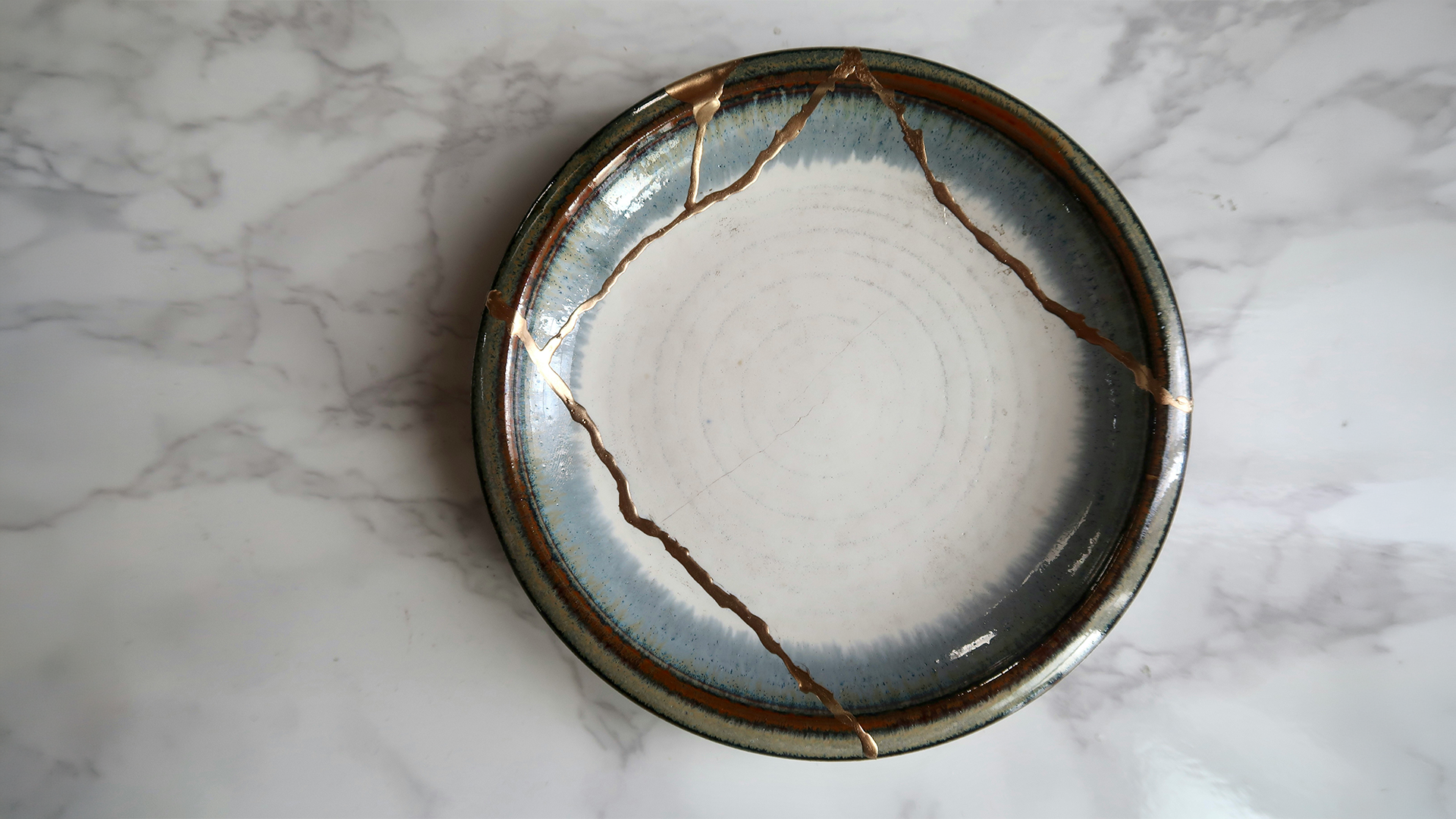
Perhaps you have heard of kintsugi. It is the traditional Japanese art form of repairing broken pottery by mending fractures with lacquer mixed with gold. It doesn’t try to hide that the object has been broken, instead the artist is able to use the flaw to bring a beauty, strength and uniqueness that wouldn’t have otherwise existed. As Makoto Fujimura, a Christian artist and author of Art+Faith: A Theology of Making, describes it, “Kintsugi is making the object more valuable than before it was dropped on the floor”. The repair becomes an important part of the object’s story.
Just as the kintsugi artist doesn’t try to pretend that nothing has happened to the repaired object, neither does God simply erase our brokenness. All you need to do is look through the Bible to see that God consistently works through wounded people. Moses’ insecurity about his speech impediment furthered his dependence on God, Paul carried a “thorn” which became his strength, Peter denied Christ yet became a leader, Joseph’s numerous betrayals became a blessing, Naomi’s bitterness became hope that eventually led to the birth of Jesus, the Samaritan woman at the well’s shame became her testimony, even Jesus retained scars after His resurrection. God does not wait for us to become flawless before using us, nor does He discard us because of wounds and imperfections. Instead, He promises to bring restoration to our scars. As 1 Peter 5:10 says, “And the God of all grace, who called you to his eternal glory in Christ, after you have suffered a little while, will himself restore you and make you strong, firm and steadfast.”
What I’ve learnt is that this restoration that God promises doesn’t necessarily mean that every scar will be removed, every circumstance will be fixed or life will return to exactly how it was. Like pottery that has gone through the process of kintsugi, it could be that God brings beauty, wisdom, compassion and usefulness that couldn’t have existed without the brokenness. To quote Makoto Fujimura again, “It’s because we are broken, we are renewed . . . and this kintsugi bowl is far more valuable than it was before it was broken.”
Unlike my daughter’s IKEA bowl which needed to be discarded, people aren’t like pottery. God does not discard us because of our brokenness, neither do our wounds disqualify us from being used by Him. He is able to create something new, leaving us stronger and more steadfast than we were before.