I never wanted to be a mother. I even managed to marry a man who was on the same page. We agreed during pre-marriage counselling that we were never going to be parents.
To clarify, because whenever I make this admission, people naturally think I’m some kind of child-hating witch with long, pointed nails, who randomly shouts at anybody under the age of 18. I don’t hate children and I don’t have a colony of cats roaming freely in and around my house.
On the contrary, I think children are adorable, especially toddlers who have just learned to walk and are still discovering the world around them. Well, children are gorgeous until they turn 13, then they just smell funny. (I am joking.)
I like children but what I liked better was the ability to give them back to their caregivers when they became challenging, boring or just dribbled a little too much. “Mother” was never an identity I thought I’d own.
Of course, if you know me, you’re probably chuckling at how life turned out for me. Today, I have a child who is not far off the funny-smelling age. A greater irony is that I’m in charge of a ministry whose sole identity is about being a mum.
Motherhood
While motherhood was never something I aspired to, I am deeply aware of how privileged I am to have a child.
I have been doing what I’m currently doing for the past 10 years, working with, encouraging and resourcing mothers. During this time, I’ve read countless stories and had personal conversations with women who struggle with fertility issues, never had the opportunity to have children or are separated from their children through life circumstances or death. It’s heartbreaking.
Mother’s Day can feel particularly sad for these women. We can talk about how these women are still significant in a child’s life—after all, it does take a village to raise a child, and these women are part of the village. However, while we recognise their special and crucial mentorship role, at the end of the day, sometimes, these women will go to sleep knowing they don’t have their own child.
Don’t get me wrong, I’m not saying every woman who wants a child but doesn’t, cries themselves to sleep on the night of Mother’s Day, or any other night for that matter. Motherhood takes many forms and women who are invested in the lives of other people’s children can make a huge difference and impact. These women can also find great satisfaction and fulfilment by doing that.
So on Mother’s Day, let’s celebrate women like Deborah, the “mother in Israel” (Judges 5:7). Let’s celebrate the foster parents, the aunties, the godmothers, the chosen mothers, the siblings, the teachers, the mentors. It’s a thoughtful and inclusive gesture when churches on Mother’s Day take the time to not only acknowledge biological mothers but also “significant aunties”.
Papercuts
However, let’s also remember that while being a “spiritual mother” may be a vitally important and influential role, it’s also not a consolation prize for a broken heart. Telling someone, “At least you’re still making a difference in a child’s life”, is no balm for a hurt they may still bear. The wound may be small, but like a papercut, sometimes the tiniest injury inflicts the worst pain.
The reality is, many of us have our own grief to bear, be it childlessness or something else. The death of a loved one. The loss of a relationship. A traumatic experience. A chronic illness.
These are sorrow and sadness that even verses like “He heals the brokenhearted and binds up their wounds” (Psalm 147:3) and “’For I know the plans I have for you,’ declares the Lord, ‘plans to prosper you and not to harm you, plans to give you hope and a future’” (Jeremiah 29:11) don’t quite touch.
Yes, there is certainly comfort in knowing the Lord loves and cares. Yet, while one’s faith is still strong and there is unwavering trust that God will take care of us, still, there is a deep but quiet hurt.
This is a pain where hearing, “At least you . . .“ simply doesn’t hit the mark. This isn’t a crisis of faith. This is a need to be held.
Seen
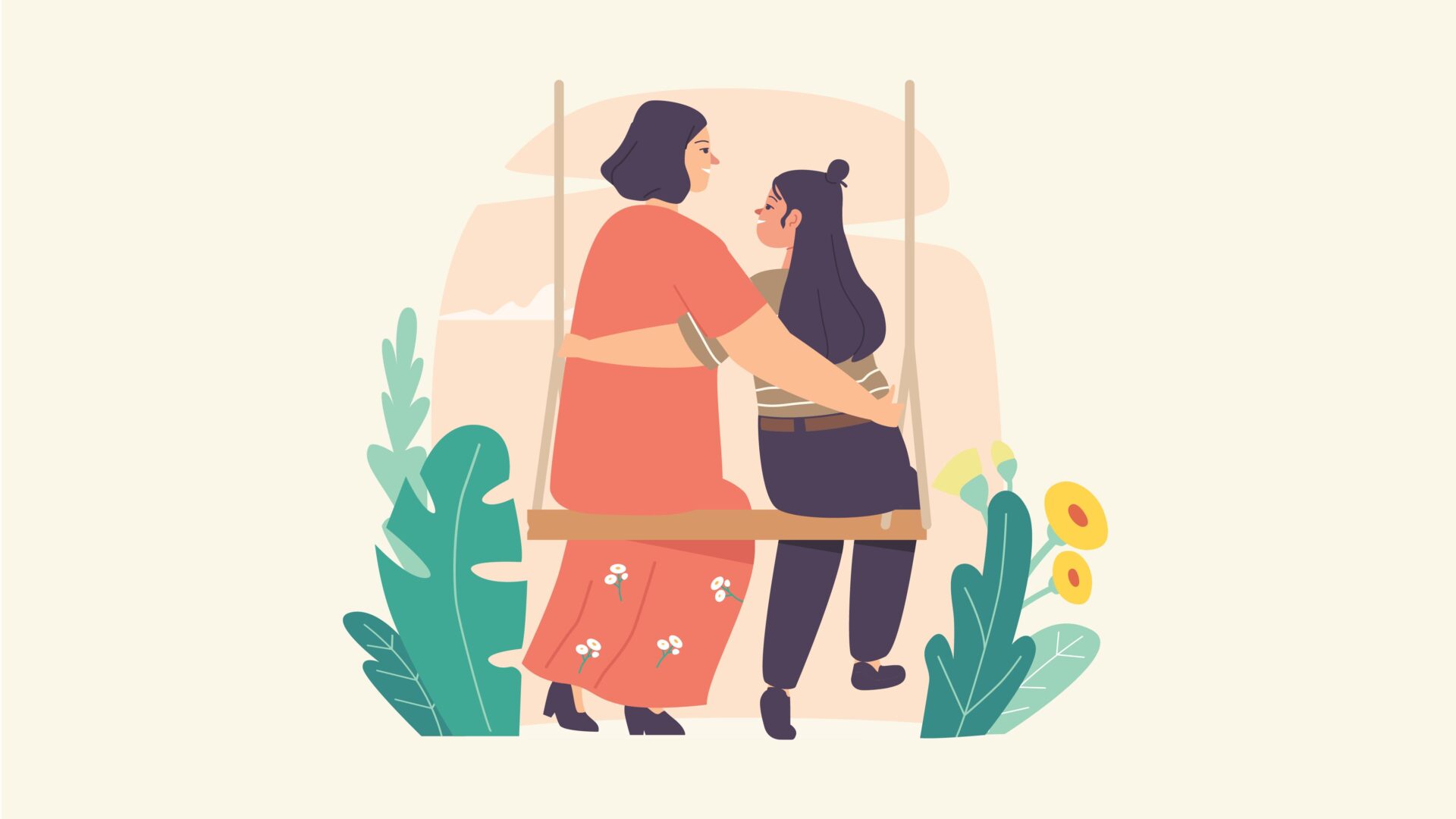
One of the most significant things a parent can do to lay the foundations of a strong relationship with their children is the concept of emotional connectedness. This is about building a deep and secure bond that allows a child to share how they feel and what they think in a way where they feel safe, seen, heard and valued.
There are a few key components to building emotional connection but one of the ways is to ensure the other party’s feelings are validated. To do so requires acknowledging how they feel without judgement, justification or the immediate urge to fix the problem.
It’s something Jesus did regularly. When He travelled and came across crowds, He didn’t judge them for forgetting God. Instead, “he had compassion on them, because they were harassed and helpless” (Matthew 9:36).
By the well in Samaria, He acknowledged the woman’s presence and spoke gently with her, without care of breaking social rules (John 4:1–26).
Instead of simply declaring “be clean!”, Jesus also physically touched a leper, a man who must have been craving human touch for a long time (Mark 1:41).
With Mary, who was mourning the death of her brother Lazarus, “Jesus wept” (John 11:35).
Jesus not only saw the pain they were showing, He was aware of the hurts that weren’t on display. He helped them realise He knew how they felt. He made them feel seen and understood. He simply held their emotions. Without judgement, justification or the immediate urge to fix the problem.
Held
Connecting with someone emotionally isn’t simply the domain of a mother and child. It’s a key ingredient for having a relationship with someone.
We all want to know we are seen, heard and valued. That it is safe for us to experience a gamut of feelings without fear of judgement or repercussion.
Children who grow up in emotionally safe environments develop secure attachment with their caregivers, which helps them to be resilient, have a positive expectation of themselves and others, manage their emotions better, and learn to form positive relationships with others.
In children and adults alike, emotional connectedness is the foundation for trust, mutual respect and long-term stability. It helps to manage conflict and foster empathy.
Imagine a world where your feelings are simply acknowledged. Imagine when nobody tries to give you a solution you never asked for. Imagine when your faithfulness isn’t questioned because you are not “rejoicing always”.
Imagine if the other person simply said, “I understand. I see where you’re coming from.”
Imagine.
Melody Tan is the project manager of Mums At The Table, a ministry of Adventist Media.