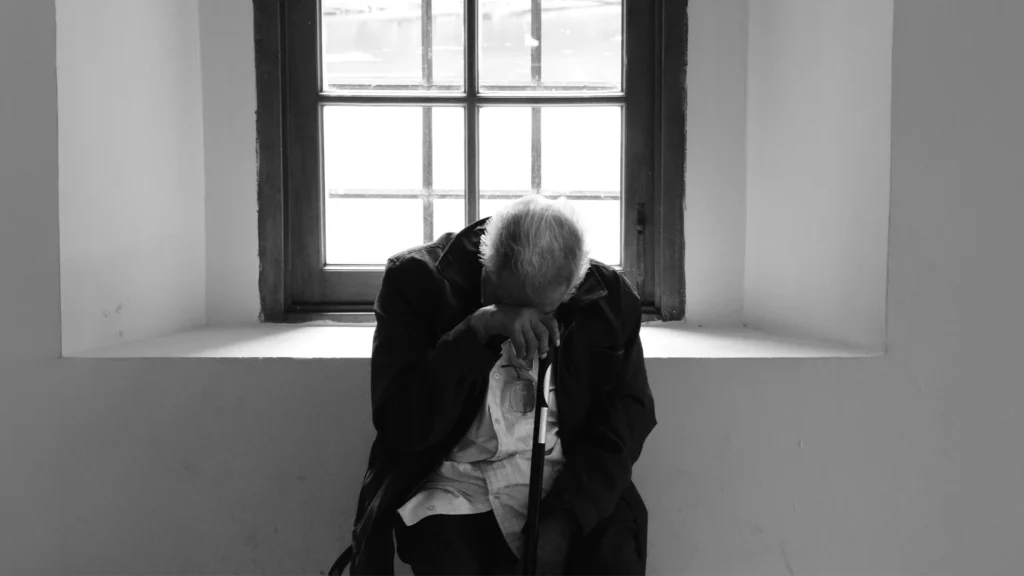
“You number my wanderings; put my tears into Your bottle—are they not in Your book?” (Psalm 56:8).*
Some pains strike suddenly, like a cyclone: sudden, loud and devastating. Others come quietly, like an unnoticed leak in the dark: relentless and unseen, slowly affecting the soul. In such seasons of suffering, sorrow can seem to fade away, unnoticed, unrecorded and unimportant.
Psalm 56:8 speaks directly to that fear. It does not explain away our suffering or shame our tears. Instead, it assures us that God attends to our lives with careful detail, even when everything feels confusing and disordered.
A prayer from the pressure cooker
Psalm 56 is not born out of comfort. It puts us right in the middle of David’s crisis in Gath, a time of fear rather than confidence. David openly admits his fear: “Whenever I am afraid, I will trust in You” (verse 3). He also describes the pressure surrounding him, with enemies twisting his words and watching his every move (verses 5,6). This is a place of sleepless nights and racing thoughts, where danger feels close and safety feels uncertain.
So when David prays, “You number my wanderings” (Psalm 56:8), he is not speaking metaphorically or in general terms. He is talking about the real, unsettled days, the pacing, the fleeing, the restlessness and inner feeling of disconnection. His confidence was not rooted in emotional strength or clarity of mind. It came from the assurance that God was with him. That conviction allowed David to pray honestly, not just bravely. He did not deny his fear; instead, he took it to God. Faith was not the absence of anxiety but the decision to speak to God while still feeling afraid. Psalm 56 shows us that trust can coexist with fear, and that prayers offered from a place of uncertainty are still seen as faith. Even when David’s path felt uncertain, he found comfort in knowing every step is known, counted and held by God.
Tears belong in the life of faith
Scripture never treats tears as spiritual failure. Hannah “wept in anguish” as she prayed (1 Samuel 1:10). Job’s friends “wept” when they saw his suffering (Job 2:12). And at Lazarus’ tomb, “Jesus wept” (John 11:35). If Jesus did not consider tears beneath Him, we should not treat them as beneath a believer either.
Sometimes tears are the most honest prayer we can offer. They are what remain when words are not enough: Lord, help me. In those moments, God does not need explanation or eloquence. He accepts what the heart can still give when we are weak. When we offer our tears in faith, they are not just noise before heaven; they are heard, honoured and held.
The God who notices particulars
Psalm 56:8 gathers together three vivid images to make a single, steady claim: God does not treat human suffering as insignificant or forgettable. David’s language is deliberate and cumulative, making the point that nothing endured in faith escapes God’s careful attention.
First, David says, “You number my wanderings.” God does not just observe our lives from a distance or in general terms. He counts every detail, including restless nights, weary days and steps taken with fear. Every moment of uncertainty, every instance of displacement, is known to Him. Nothing about our confusion or instability goes unnoticed.
Second, David prays, “Put my tears into Your bottle.” This image is intimate and startling. God is pictured as preserving what we normally try to wipe away. What seems wasted to us is kept by Him. The message is simple and profound: my grief is not excess to You, and my pain is not discarded.
Finally, David asks, “Are they not in Your book?” God not only notices our suffering, He remembers it. He records what it cost us to endure, what was carried, what we lost, what we survived. Suffering is not erased by time or forgotten by heaven. The God who counts our steps and gathers our tears also keeps the full account of our story.
Two pictures to carry with you
Some years ago, a cyclone struck the South Pacific, leaving a small church building standing but battered. The roof leaked and the floor was damp. But on Sabbath morning, people came to worship, some with bare feet, others with Bibles wrapped in plastic and some looking too tired to smile. A deacon placed bowls under the leaks to catch the water. Later, someone emptied the bowls and said quietly, “We’ll fix the roof, but for now, we’ll catch what falls.”
I have never forgotten that moment. Until everything is fixed, love catches what hurts. According to Psalm 56:8, God does something similar with human sorrow: He takes care of what falls, because He plans to restore what is broken.
Here is another picture that is personal. When my son was about five, he became dangerously ill with a fever. What began as a normal sickness intensified quickly, got worse, and there was a moment when it felt as though we might lose him. I remember feeling helpless, watching him struggle, counting his breaths and checking his temperature over and over. I prayed with urgency, without polished sentences. We could not heal him by willpower or love, but we refused to leave his side. We stayed close, with cool cloths and whispered words of comfort, doing what we could while pleading with God to do what we could not.
That experience taught me something about love: it does not always remove suffering instantly, but it stays with the person who is hurting, paying attention, and refusing to give up on them. This is precisely what David confesses in Psalm 56:8. The Lord is not far away from our troubles. He is close enough to see our struggles and notice each tear. He collects them into His bottle and remembers our pain, as David asks, “are they not in Your book?”.
How this changes us
First, be honest with God, not trying to put on a show. David’s prayer is not polished. “The LORD is near to those who have a broken heart” (Psalm 34:18). Nearness is not earned by composure.
Second, give space for others to express their sorrow. The instruction to “weep with those who weep” (Romans 12:15) is a key part of being a Christian. Sometimes the most helpful thing you can do is simply be present.
Finally, do not be ashamed of your emotions. Tears are not a sign of spiritual weakness. Jesus cried, showing that it is possible to weep while still having perfect faith and love.
The gospel guarantee
The Christian hope is not just that God watches our suffering. In Jesus Christ, God became part of it. We have a High Priest who “can sympathise with our weaknesses” (Hebrews 4:15). His compassion is real, not just an idea.
The story ends with God restoring everything: He “will wipe away every tear from their eyes” (Revelation 21:4). The God who sees our tears now is the same God who promises they will not last forever.
So, take your sorrows to Him, just as they are. Do not try to make them sound better or apologise for feeling that way. Your grief is seen and heard. Your tears are not wasted. The Lord knows your pain and will not forget your story.
* All Bible references used in this article are taken from the New King James Version®. Copyright © 1982 by Thomas Nelson. Used by permission. All rights reserved.
Dr Limoni Manu O-Uiha is the dean at the School of Theology at Fulton Adventist University in Fiji.