Growing up, I heard countless stories of the giants of faith in the Bible. Whenever I heard them, I felt a mix of curiosity and longing. Was it possible for me to experience something like this?
One person in the Bible whose life was filled with miraculous experiences is Aaron. His story is a testament to the goodness of God. Slavery was all he knew . . . until it wasn’t.
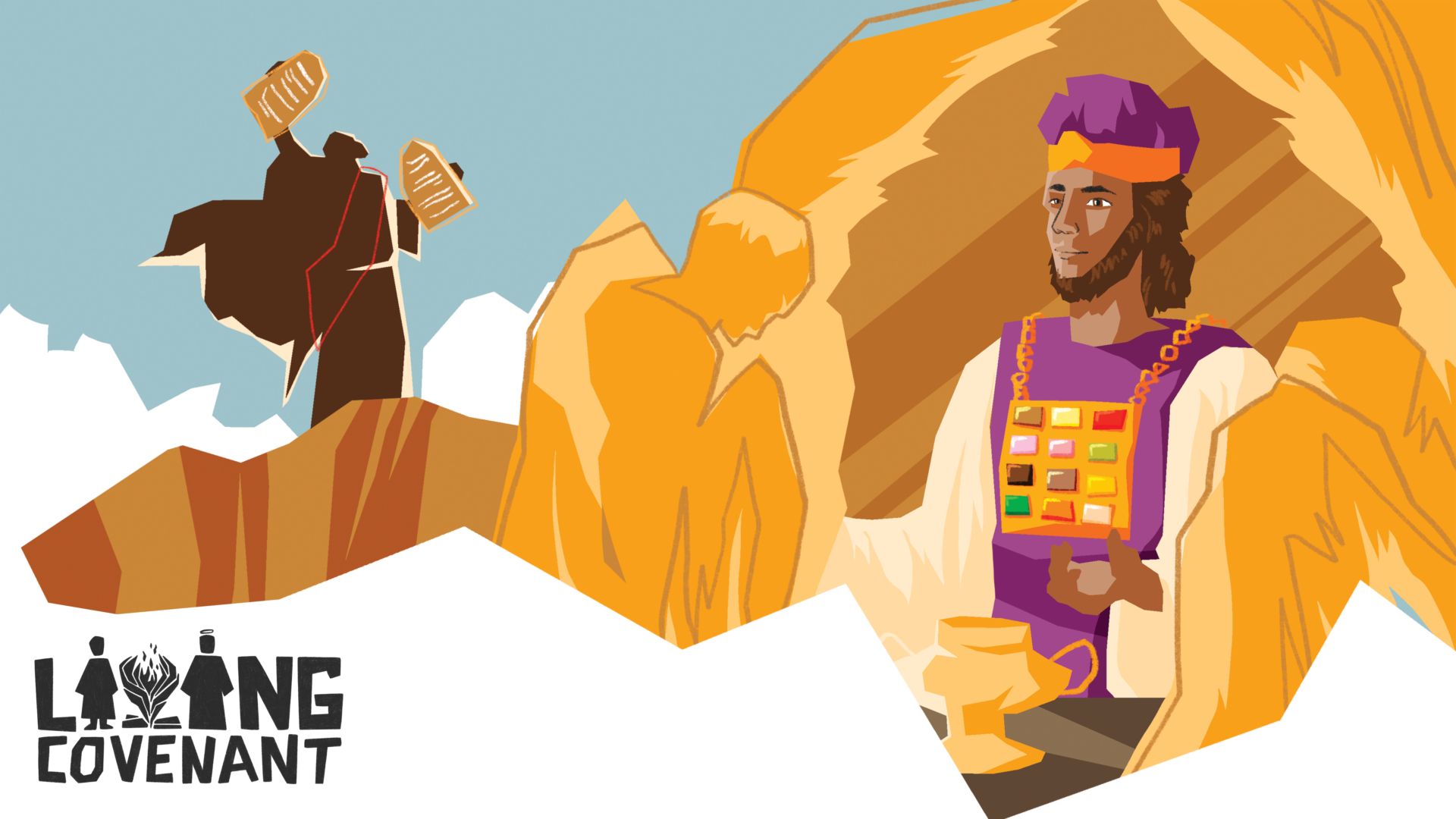
God intervened and worked through Aaron in amazing ways. Aaron was used by God to hold the rod that became a serpent, turn water into blood, dust into gnats and performed many other wonders to freed God’s people. He walked through the Red Sea as it opened and closed like a storybook. By day, he travelled under the shade of God’s presence in the cloud; by night, he rested in the warm glow of God in the pillar of fire. He even heard God speak directly to him on a mountain. Eventually, God called him to be His mediator—His High Priest. That’s a pretty big leap for someone who had long been a slave.
When I think about Aaron’s time with God, I’m amazed. He spent his life seeking to follow God. His purpose was to rescue the Israelites from slavery, lead them into freedom and experience the love of his Saviour. He was also called to share that love with others and offer atonement on behalf of the people. Israel was learning how to be God’s people and Aaron was at the heart of it all.
As a Christian, my goal in life is the same: to know God and walk through life with Him. But sometimes, when spiritual highs give way to long stretches of waiting and wandering in the wilderness, that goal can feel a little fuzzy.
Aaron knew his purpose and identity, yet his need to please others often pulled him off course. When Moses went up the mountain to meet God, Aaron was left in charge. Though Aaron knew God and had seen His glory, he struggled to fully devote himself and was still trying to please others. Moses didn’t return from the mountain quickly. Weeks passed. The Israelites grew impatient and wanted to take matters into their own hands. As a result, Aaron ended up doing some wild things. He melted down gold earrings to make a calf statue, then credited the people’s redemption from Egypt to it and tried to honour God by naming it after Him—as if he could appease both God and the people. But God doesn’t work like that.
Because of his lack of obedience, Aaron’s actions caused many problems, including the death of many people and a plague. This wasn’t his only slip-up. His family faced challenges that led to his sister getting leprosy and his disobedience meant that he died before he made it into the promised land. So, Aaron lived this crazy life, saw amazing, incredible miracles . . . and made many mistakes along the way. In a strange way, I’m thankful for that, because I do too.
I remember when I was graduating from university, I didn’t know what I was going to do with my life. By the time I finished, I had little to no desire to use my degree. Instead, I felt like God was calling me to do mission work. Not only did I love travel, but I also wanted to use the Spanish I’d been studying and do something meaningful to help others. God absolutely exceeded my expectations. I ended up in a mountain town in the Cloud Forest of Costa Rica, teaching English to kids. My relationship with Jesus blossomed during this time, and like the Israelites and Aaron, my reality was transforming as He became the centre of my life. As I read Scripture, the words of who He is became a living reality. I was finding freedom from old thought patterns and skewed beliefs, experiencing my own little Exodus from confusion and pain into true freedom. On top of this, I was learning a new language and culture, meeting beautiful people and having so many adventures. I remember sitting on a terracotta floor, looking out at the rainforest, feeling on top of the world, and thinking I had arrived. Smooth sailing from here on, right?
But like Aaron, I have since found myself wandering in the wilderness, in a constant process of learning and unlearning. Like Aaron, I’m far too often guilty of choosing to please others over God. Like Aaron, I try to accomplish God’s purpose for my life with my own strength, according to my desires, not His.
When Aaron was confronted with his grievous mistake after the calf was made, he became defensive, played the blame game and lied to prove his innocence. But God gave him and the Israelites a choice: “Then Moses stood in the entrance of the camp and said, ‘Whoever is on the Lord’s side—come to me!’ And all the sons of Levi gathered themselves together to him” (Exodus 32:26).
God knew Aaron would make mistakes—but God’s call came with the promise that He would never abandon him. Even as Aaron wavered between pleasing God and pleasing others, God remained faithful. He didn’t wait for Aaron to get his act together before using or working through him. Instead, He taught him lessons along the way. That’s what the wilderness can be for us too: a place where we can unlearn old habits and allow God to teach us how to walk in freedom.
Just as Aaron helped lead the people out of bondage, Jesus came to rescue us from the bondage of sin. But unlike Aaron, who never entered the earthly promised land, Jesus will lead us into the true Promised Land where we will know Him for eternity.
I often feel overwhelmed by both my past and present mistakes. But Aaron’s story gives me hope. Disobeying God will always have its own natural consequences, and for the benefit of ourselves and others, we should strive to follow Him wholeheartedly. Yet even when we miss the mark, God wants to forgive us and teach us through our failures. He’s not looking to condemn, but to help and save us. If His goal was punishment, He wouldn’t have continued to use Aaron after the golden calf incident. As Jesus says, “For God did not send his Son into the world to condemn the world, but to save the world through him” (John 3:17).
After Aaron’s mistake, he had a choice: side with the Lord and receive forgiveness, or bear the full consequence of his disobedience. We face the same choice. We can dwell on our mistakes—or we can focus on God’s call to walk from bondage to freedom, not just for ourselves but to lead others. Yes, we’ll stumble, make poor decisions and wander from time to time—but that doesn’t have to stop us from coming back to God and seeking to obey Him.
God has created us to know Him, to walk in freedom and to learn to trust Him as we go. When we stumble, we get back up. We let Him teach us through it. As Hebrews 4:16 reminds us, “Let us therefore come boldly to the throne of grace, that we may obtain mercy and find grace to help in time of need.”
Cora Fleming, from Tennessee, USA, has found home in many corners of the world. She’s passionate about exploring cultures, spending time in nature and learning from life wherever it takes her. She currently lives in Kingscliff, Australia.