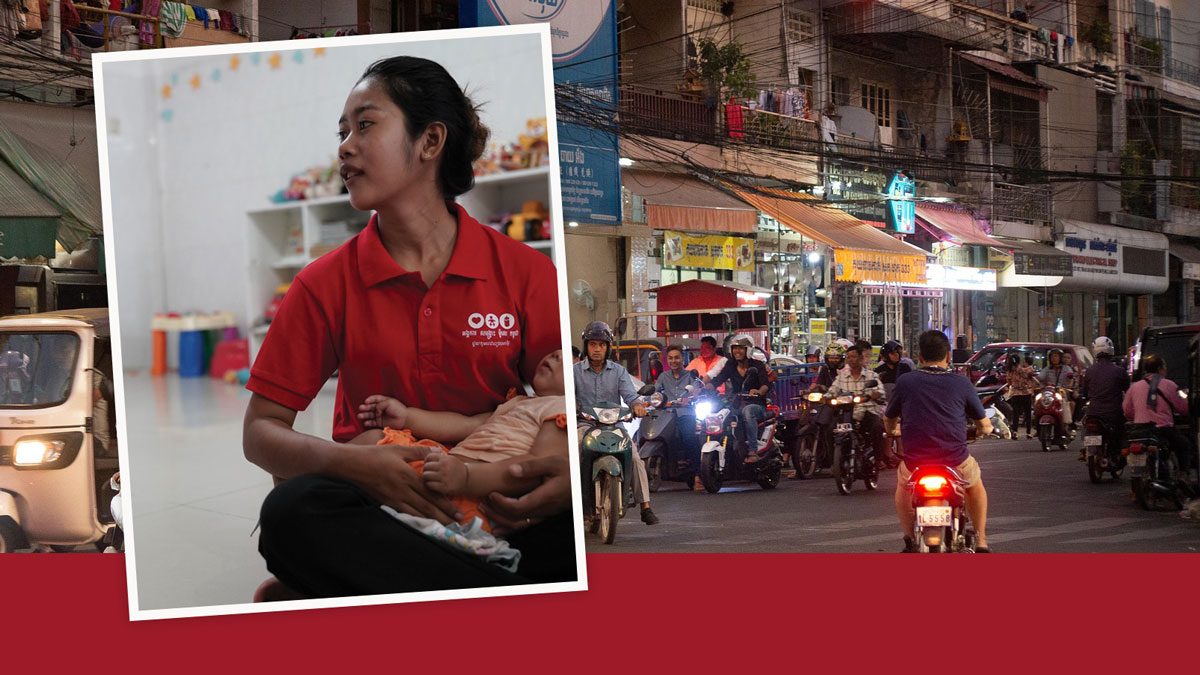
Before little Taeaik* was born, Charya,* her mother, was homeless, wandering the streets of the busy Cambodian city where she lived, barely surviving by trading her body. One night, filled with uncertainty and fear about the future, a pregnant Charya walked by a NightCare centre. Something made her step inside, where she saw little babies and toddlers, cared for by nannies, playing safely and happily. That night she knew that NightCare could help protect her unborn baby.
“I found the peace and comfort I was desperately searching for when I went into the NightCare centre,” she says. “It was the lifeline Taeaik and I needed.”
Charya, like all mothers trapped in the prostitution industry, faces a heartbreaking choice: should she bring her child to work or leave her child alone overnight? If with their mums, babies and toddlers are often given drugs to keep them quiet under beds or in cupboards. When left alone, they can wander the streets often getting hurt. And when taken to substandard care, they reportedly receive less attention than other children, are injured when unsupervised and become sick from unhygienic food. Most mums have no option but to take their children with them to meet clients.1 Without proper care, these little ones are abducted, abused or exploited.
The babies and toddlers born in the red-light districts of Cambodia face horrors that no child should ever experience, and the emotional damage is incalculable.
They become victims of social discrimination, are deprived of education and suffer from emotional, psychological and physical trauma. When older, girls are groomed for the same profession while boys end up in menial work. Oftentimes, these children are overlooked and shunned by mainstream society.2
At Asian Aid, we believe that each child matters immensely and deserves hope. And these innocent lives urgently need protection and care.
“Red-light districts in Cambodia that are overrun with violence, drugs and abuse are no places for the little ones who are born in them. While there are services that help their mothers who are also trapped in this industry, there is little to no help available for their babies and toddlers,” says Joanna Ryan, Asian Aid’s programs manager. “That’s why at Asian Aid we’re supporting the NightCare program because we know that unconditional love and safety are powerful tools to help break the cycle of trauma in the lives of these precious little ones.”
At NightCare, trauma-informed care is essential for the little ones like Taeaik. Early trauma significantly impacts brain development, and having a secure attachment with a caregiver can make a lasting difference. Asian Aid’s NightCare for Little Ones program ensures babies and toddlers experience consistent love, stability and comfort from skilled nannies. These attachment bonds provide the safety and nurturing that the little ones need, offering a foundation of healing and resilience.
A few weeks after her little one arrived, Charya brought Taeaik to NightCare, where she has been safe and loved. An evening at NightCare begins with hugs and kisses from Taeaik to the nannies. She then joins her little friends in all kinds of noisy, happy games and mischief. But when mealtime starts, Taeaik is learning self-control and manners, waiting for her turn and sitting on the mat with her healthy dinner. After a bath, clean clothes and songs, tiredness begins to show on her little face. As a nanny pats her back, Taeaik knows it is safe to fall asleep. NightCare has become her haven, where she is thriving.
NightCare helps:
- Prevent further abuse and exploitation by providing safe shelter and care during the night when the little ones are at higher risk.
- Little ones heal from the trauma they have experienced by providing consistent and therapeutic caregiving.
- Provide an environment of love, health and joy through skilled and caring nannies, consistent routine, age-appropriate play and healthy meals.
- Prepare the little ones for school by helping them learn self-care skills.
Find out more at asianaid.org.au/nightcare.
* Names changed.
- “Global Health Promise: Health of female sex workers and their children: a call for action.” Retrieved from <thelancet.com>.
- “Education for Children of Commercial Sex Workers (CSWs): A Community-based Participatory Approach.” Retrieved from <rgniyd.gov.in>.
Pudens Isabel is the marketing and communications coordinator, supporter engagement of
Asian Aid.