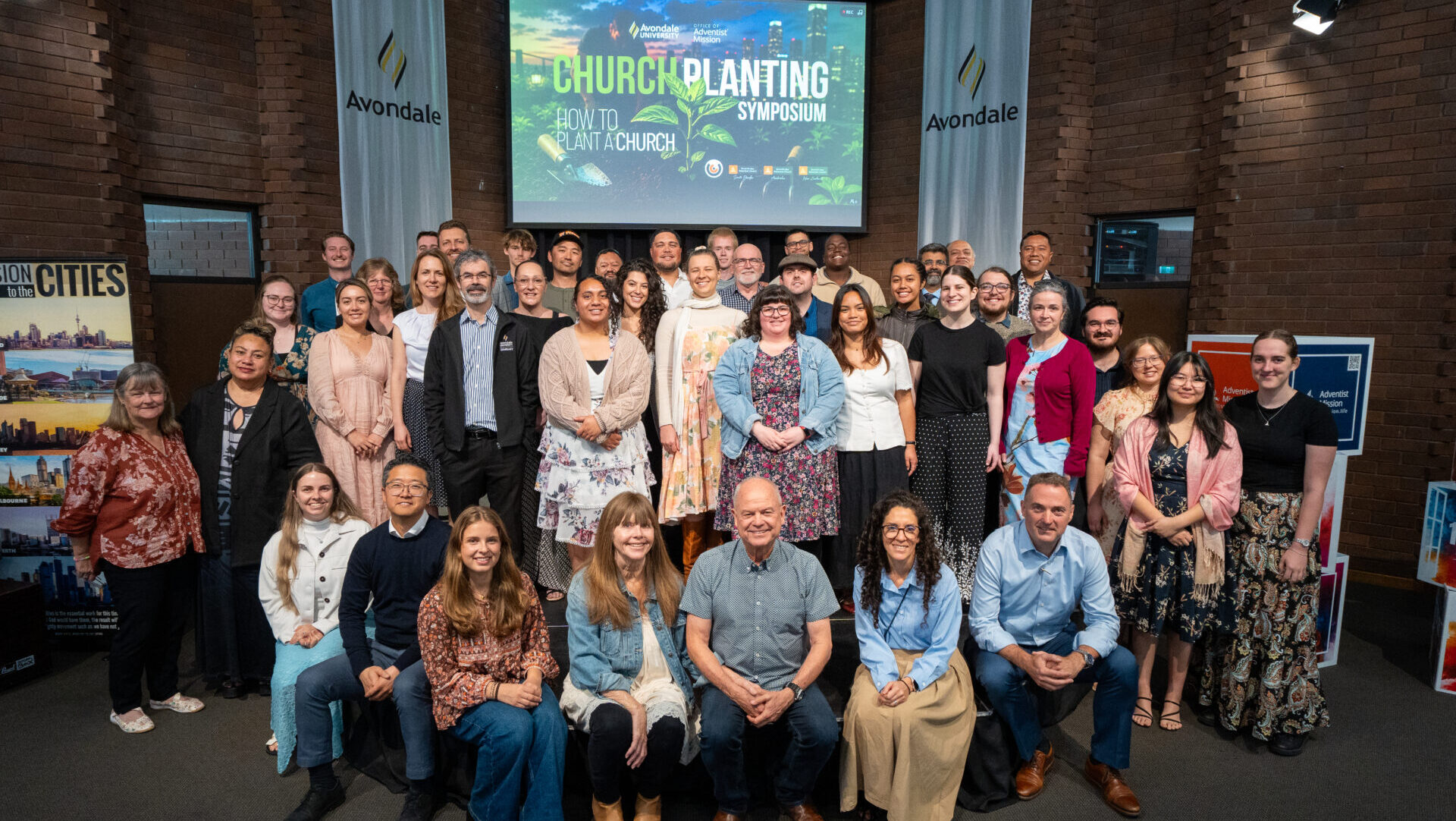
Students preparing for ministry were encouraged to explore new approaches to reaching increasingly secular communities during a church planting symposium held at Avondale University, Cooranbong (NSW), on October 9 and 10.
The event brought together students for presentations and discussions on disciple-making, church planting, digital ministry and engaging people with little connection to organised religion.
The symposium was organised collaboratively by South Pacific Division (SPD) Adventist Mission, Avondale University Seminary, Avondale University Church, the Australian Union Conference (AUC) and the New Zealand Pacific Union Conference.
Presenters included SPD Global Mission director Dr Wayne Krause, AUC Adventist Mission director Pastor Roy Kim, church planting pioneer Amy Leposa, Center for Secular and Post-Christian Mission associate director Pastor Jonathan Contero, SPD Adventist Mission director Pastor Wayne Boehm and content creator SJ Foaga.


Sessions explored the connection between disciple-making and church planting, approaches to reaching secular and post-Christian communities, relationship-based ministry and the use of digital platforms to connect with new audiences. Participants also heard practical experiences from existing church-planting initiatives.
For Avondale Master of Ministry student Lindsey Birch, the symposium demonstrated how principles associated with church planting could be applied across different areas of ministry.
Although she does not currently feel called to establish a new church, Ms Birch said hearing about The Table, a church-planting initiative in Victoria, was particularly inspiring. “I certainly see a lot more of how God is moving, and I’m curious about how I can apply some of the principles I’ve learnt in the types of ministry I’ve been called to,” Ms Birch said.
“There was more than just the church planting topic discussed,” she added, highlighting sessions on social media ministry and understanding different cultural contexts.
For Ms Birch, events such as the symposium are important for helping current and future church leaders stay informed about research and approaches relevant to contemporary communities. “It’s really important for ongoing professional development, and for leaders in the church, whether they’re lay leaders or whether they are employed or planning to be employed church leaders,” she said.
She highlighted the importance of understanding current research on the demographics churches are seeking to reach and learning from approaches that have proved effective in different ministry settings.
Throughout the weekend, participants had opportunities to interact with presenters, ask questions and reflect on how the principles discussed could be applied in their own ministry contexts.
“On the Friday night and over lunch on Sabbath, quite a number of us got to sit and just talk directly with the speakers and discuss some of the ideas or some of the stories that they shared. So that was really valuable as well,” she said.