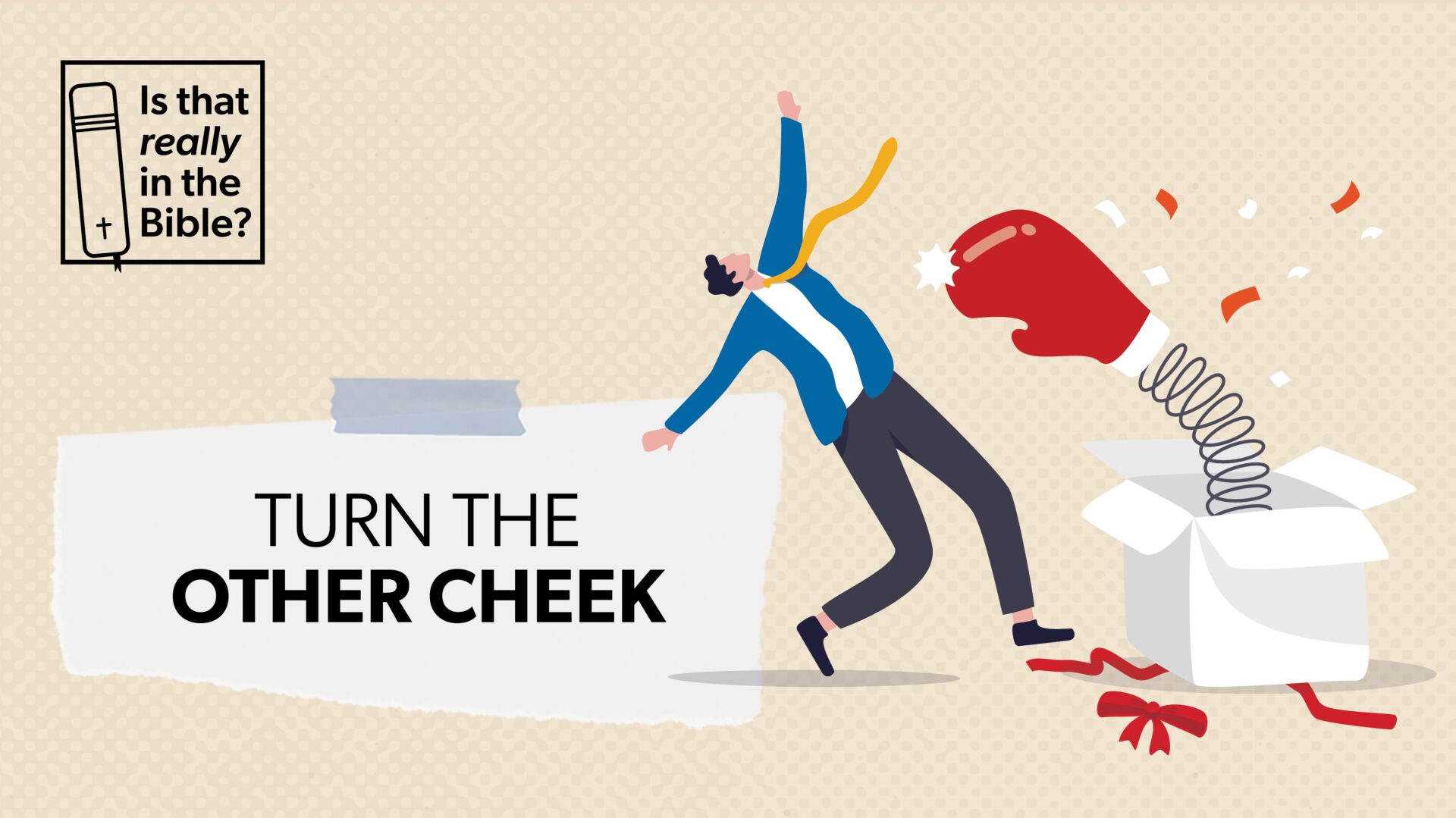
It is generally not disputed whether or not the phrase “Turn the other cheek” is found in the Bible. Straight from Matthew 5:39, these are Jesus’ own words and seem to sum up what it means to be a Christian. Someone’s been bullying you at the office? Turn the other cheek. Family drama? Turn the other cheek. Your friend said something bad about you behind your back? Turn the other cheek.
Jesus said these words, so there’s nothing more to be said. Right?
Not quite. The misunderstanding lies not in whether it’s in the Bible, but in the interpretation of the words themselves.
The verse says, “If anyone slaps you on the right cheek, turn to them the other cheek also.” The natural reaction might be to slap the person in return. A slap for a slap. Verse 38 references Exodus 21:24, “Eye for eye, tooth for tooth”, a law given to the Israelites to end revenge cycles and punishments being much greater than the crime.
Yet Jesus takes this a step further. In instructing people to turn the other cheek, Jesus is telling them to not retaliate in the same way. But it also doesn’t mean simply accepting harm done against you.
In the ancient world, slapping someone was only done with your right hand. A slap with the right hand to a right cheek—notice Jesus does specify which cheek—was a backhanded slap, a slap that was demeaning and humiliating, often used against slaves or someone inferior to you. It is a terrible insult.
In turning your head, you bare your left cheek to your assailant. A slap on the left cheek with a right hand is an open-handed slap—a slap between equals. Turning the other cheek is not just taking the abuse, but a way of standing up for yourself, of telling the slapper that you are their equal, that you are worthy of dignity and respect. It’s a powerful response, yet still nonviolent.
Personally, I hate conflict. I’m a people pleaser, and standing up for myself doesn’t come naturally. However, I have learned how to be assertive because my mum often pushed me as I was growing up to stand up for myself. If someone was mean to me, I wouldn’t be able to respond in the moment, but when I’d come home from school upset, my mum would talk me into going back the next day with a response I’d memorised and practised, telling the person who’d hurt me how I felt and how I didn’t appreciate their words. Generally, this was successful; often I received apologies that left me feeling empowered instead of ashamed.
“Turn the other cheek” is often used in situations where it shouldn’t be. We’re told to keep the peace, to keep reputations intact and not speak out against abuse—to just forgive. But we do not go against Jesus’ command to turn the other cheek when we stand up for ourselves, as long as we do it in a way that is gracious and slow to anger. It can be incredibly harmful to hear “turn the other cheek”, especially in situations involving abuse. Assertiveness does not automatically equal aggression, and while we can and should forgive, we should still take steps to make sure that, if we are hurt, we protect ourselves from being hurt again.
So be mindful when using the phrase “Turn the other cheek”. Teach your children to love and forgive while at the same time teaching them to stand up for themselves. Create boundaries where needed and walk away from harmful situations. Through God’s great love for us you have incredible worth. Start acting like you believe it.