I grew up mostly without Christmas. That might seem strange, but I come from a culture where Adventists haven’t traditionally celebrated Christmas. Don’t get me wrong, I love Christmas and I celebrate it now, but there were only a few years growing up that I had the “real Christmas experience”. Don’t worry, I don’t feel too deprived. I always spent the holidays with my grandparents and other extended family, and we often went to the beach and had a nice meal. Christmas just wasn’t mentioned. And Santa? Forget about him. My only memory of Santa was when my sister and I told a friend of ours that he wasn’t real. That didn’t go down well.
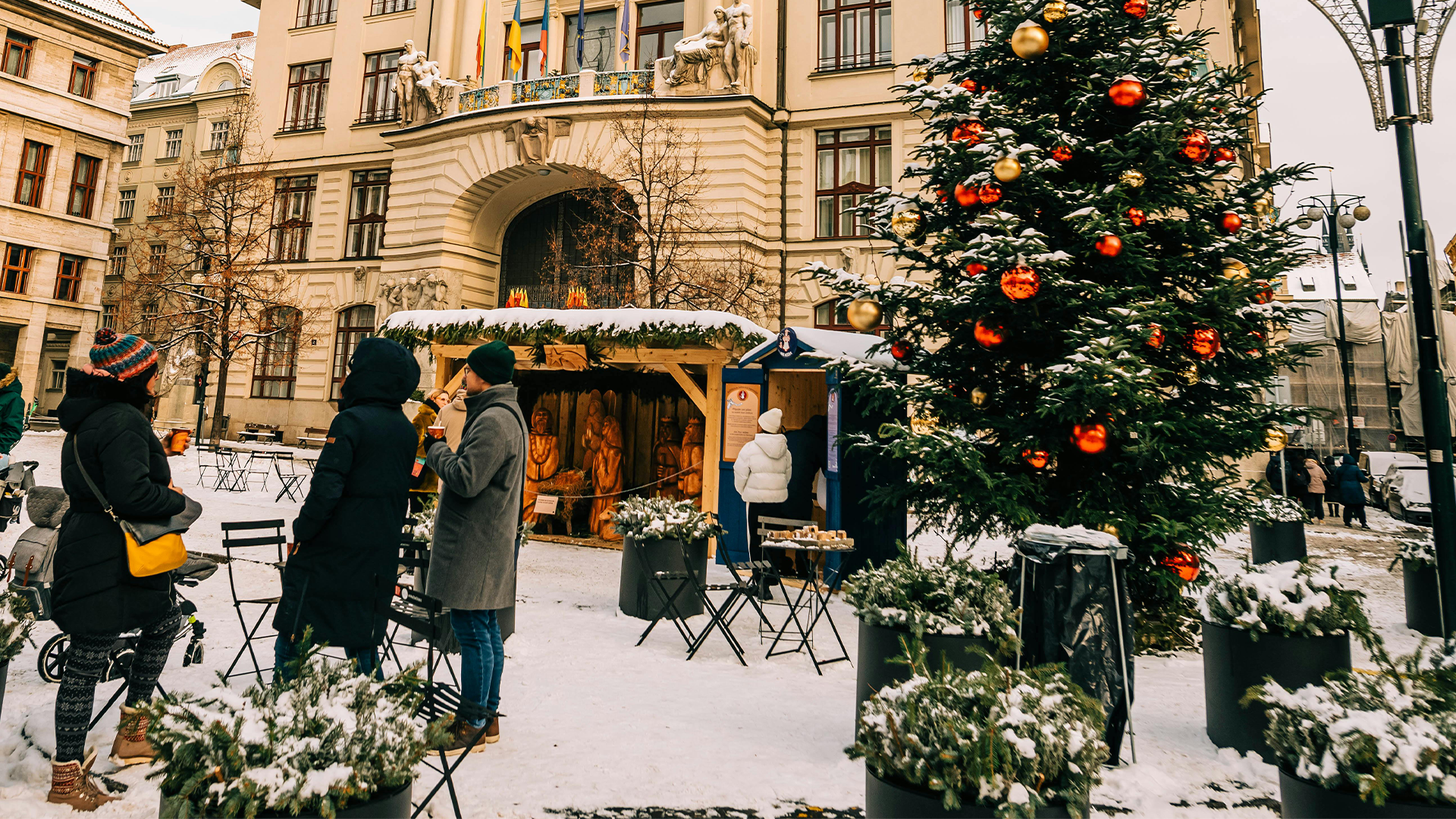
But I have experienced a few memorable Christmases. For example, when I was living overseas and spent the holidays with my best friend. The day before Christmas we were in Prague, wandering through a cute little neighbourhood, empty of tourists. The cobblestone streets were narrow, with no cars, and the houses and little apartment blocks crowded together like gingerbread houses. It was also strangely silent, until we followed the sound of laughter and came upon crowds of locals, who were congregating in the cold and handing around hot drinks, talking and laughing with one another. It felt like a moment trapped in time. The houses weren’t really decorated and no-one seemed to be in a hurry. It was just a community come together to celebrate the joy of living.
“The true meaning of Christmas” is a phrase so cliché I can’t believe I just wrote it down, but the reality is that we talk about it, roll our eyes and continue on with nothing changing. Could it perhaps be that we don’t know how to combine what we as Christians see as the true meaning—Jesus’ birth—and the way our society celebrates it today?
I think there’s a way. It starts with the origin story of Christmas, which is harrowing to begin with. I cannot imagine the fear that Mary and Joseph must have experienced, tucked away in a stable all alone while Mary went into labour. But they made it through, and Mary “gave birth to her firstborn, a son. She wrapped him in cloths and placed him in a manger” (Luke 2:7). But the story gets even more special when the first guests arrived.
The shepherds were probably poor, and not who you’d expect to be the firsts to meet the King. I guess it foreshadowed Jesus’ ministry and His attention to those on the margins of society. The second group to meet Jesus were wealthy, but they were foreigners. They brought gifts, but they were not Jewish—also not who you’d expect to be at the birth of Jesus.
See the first Christmas was about Jesus, yes, but it was also about the people who came to see Him, that quiet connection with unconventional people and the lives that were changed as a result. Christmas today is also about connecting with our community and loving those around us despite differences. As Ephesians 2:14 says, “For he himself is our peace, who. . . has destroyed the barrier, the dividing wall of hostility.”
Unfortunately, Christmases can sometimes be lonely. Families might be far away or a source of unhappiness. But community can be found in unlikely places—a lonely church member or someone of a different faith, a neighbour, friend or distant relative you’ve lost touch with. Growing up, even though I didn’t have all the Christmas trappings, I didn’t feel deprived because I was surrounded by people who loved me and made an effort to show it. While decorating and giving presents can bring a lot of joy, I’ve seen that sometimes it brings more stress than it should. And it can never substitute for genuine human connection.
Just like in Prague, the true heart of Christmas was in the little back neighbourhoods, not in the Christmas markets in the main square. Just standing in the cold street, offering a neighbour a hot drink and a moment of conversation.