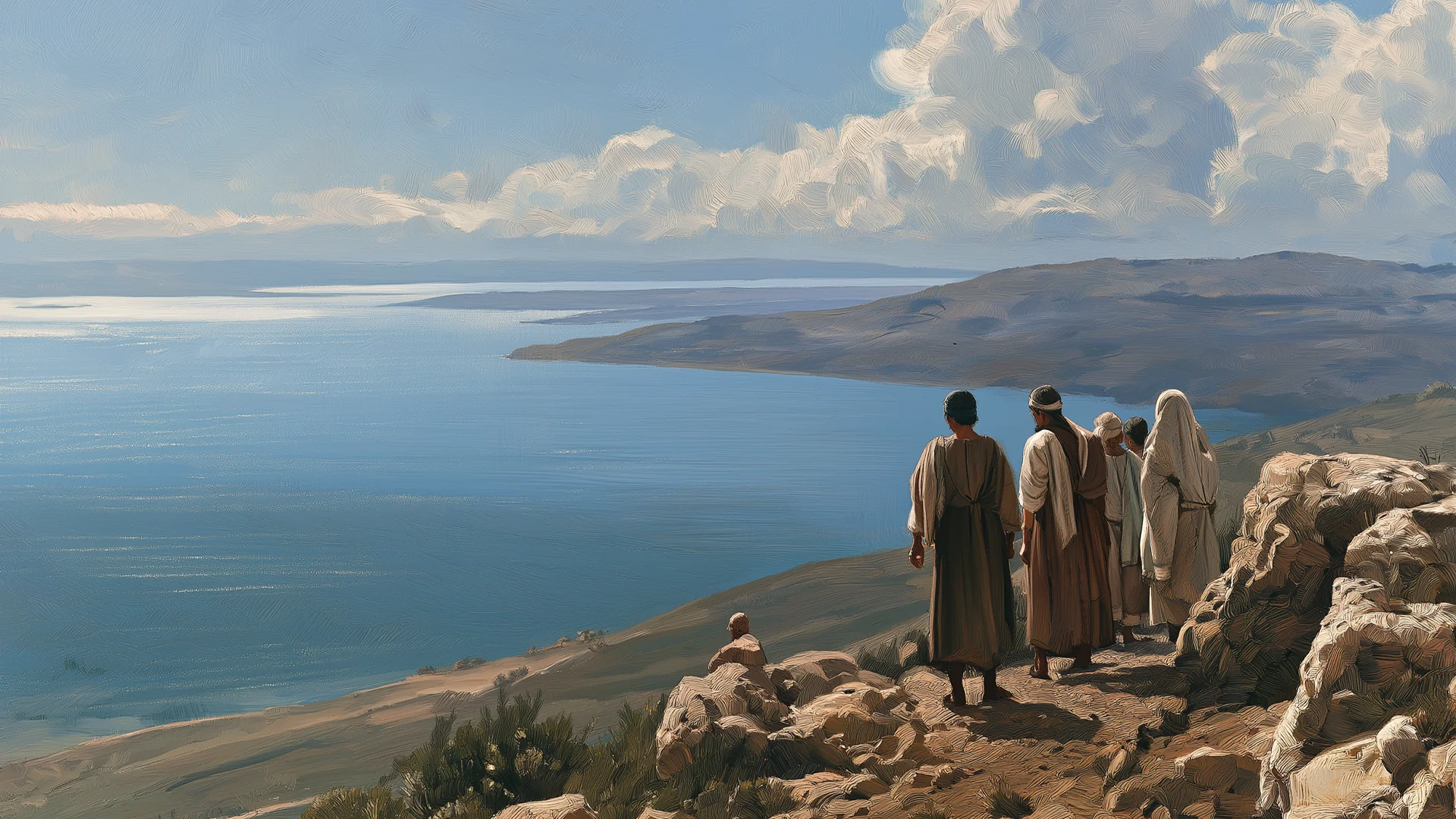
Before it was the Great Commission, it was a story (see Matthew 28:16–20). A mismatched group of believers—“but some of them doubted!” (see verse 17)—gathered on a rocky mountaintop, looking across the Sea of Galilee sparkling blue in the springtime sunshine and to the hills of the “foreign lands” beyond.
In the previous few weeks, they had been through the most traumatic and confusing time of their lives. When Jesus was welcomed by the crowds in Jerusalem, they had hoped that He was about to become their King, but less than a week later He was crucified as a political rebel, executed among thieves. Barely had they time to grasp the brutal reality, cruelty and injustice of His death that there emerged claims and stories of His resurrection—and then He began appearing to many of them: to Mary at the tomb, on the road to Emmaus, in the Upper Room, on the beach in Galilee and more.
Then they met Jesus on this mountaintop in Galilee, “where Jesus had told them to go” (verse 16). And He gave them the instructions to go and tell and teach and baptise that we now know as the Great Commission.
But before it was the Great Commission, it was a story. Which means we should first read it as a story. Which means Jesus was not primarily talking to us. If anything, He was talking about us.
As much as we might wish we were, we weren’t there. We were not among the group of disciples described in verses 16 and 17, but in the instructions given to the disciples in verse 19: “Go and make disciples of all the nations. . . to the end of the age” (see verse 20). We find ourselves in this story, not at its centre but at its fringe.
These verses are so familiar to many of us that we often miss how remarkable it is that we read them together in a church or small group almost 2000 years later—in a place they could never have imagined, so far away, in a society so different from theirs, using technology—whether a bound book, printed magazine or a small screen—that would have boggled their minds, in a language that would not be recognisable for almost 1500 years.
It’s an amazing story of the stories of Jesus being told and re-told, translated and transmitted across the generations, from person to person, group to group, people to people, and from continent to continent and island to island. And somehow across all those people and places, the story came to our place and to us.
When we recognise ourselves situated at these farthest reaches of this commission, we can understand more of its great scope and inclusivity. We find ourselves in this story first as recipients and beneficiaries of this commission and of the faithful response of those first disciples—and the countless others who have taken on the story as their own. They and their stories are only reasons why we can then read it as our commission.
When we read it first as a story, this climactic command in Matthew’s story of Jesus should first invite a response of wonder, gratitude and humility. We receive before we are asked to give. We are amazed—and then invited to take our place in this great story of the Great Commission. It is a story that we have received only because of the goodness of God, the reality of Jesus and the sacrifices of so many of His followers across the centuries since. The invitation to be His disciples in our time and place begins with reading the Great Commission for the unlikely and awe-inspiring story that it is.
Nathan Brown is the book editor at Signs Publishing.