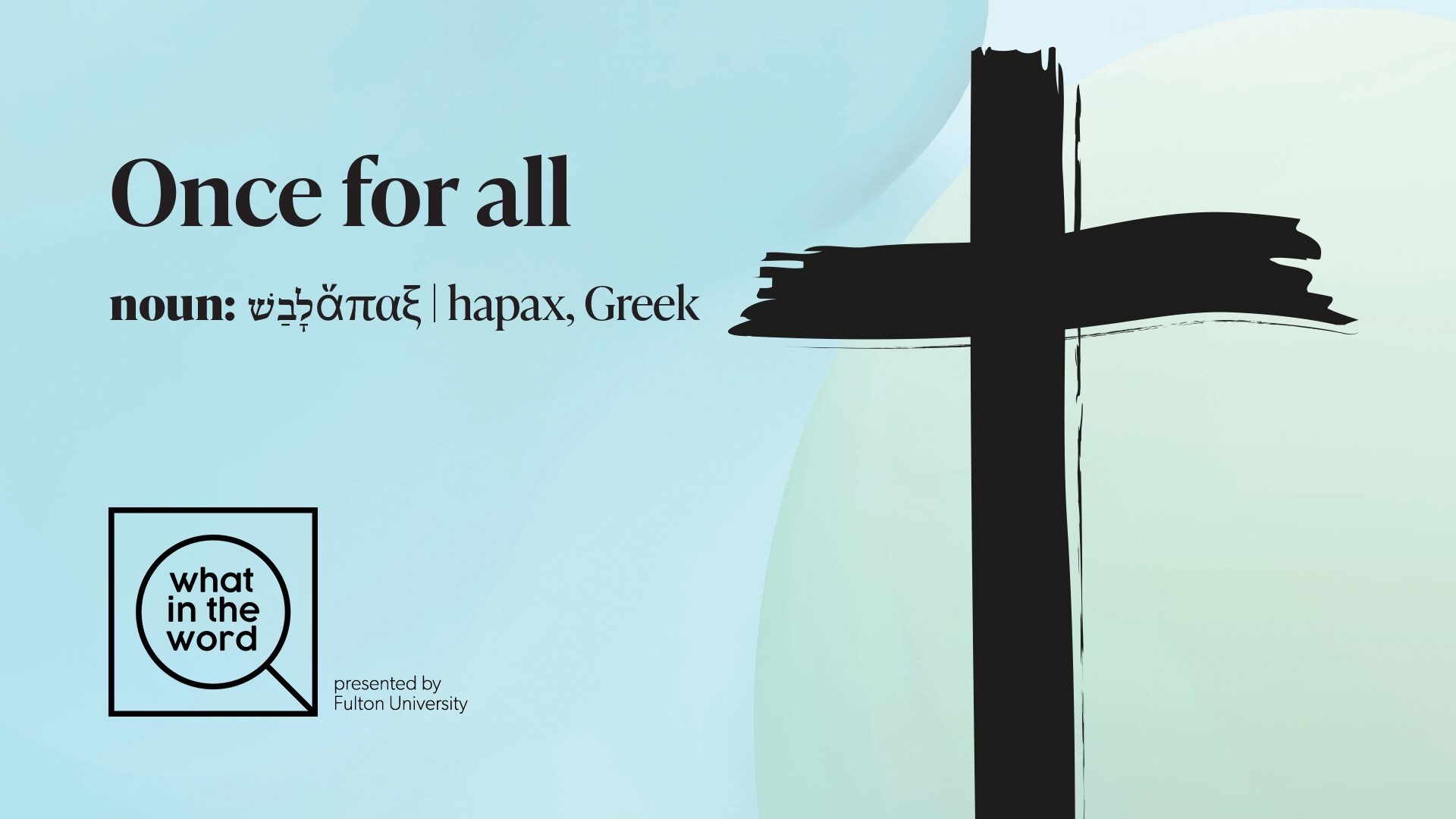
The New Testament places great value in a small word: hapax, “once”. In Hebrews 9:26–28 (NKJV), it rings like a gospel bell. Christ “appeared to put away sin by the sacrifice of Himself”, was “offered once to bear the sins of many”, and will “appear a second time, apart from sin, for salvation” to those who wait for Him. This one word connects past grace, present confidence and future hope.
In everyday Greek, hapax means that something happens only once. It can also mean something is final when comparing it to things that occur repeatedly. Sometimes the NT intensifies this with ephapax, “once for all” (Romans 6:10; Hebrews 10:10). Hebrews uses hapax to insist that Jesus’ sacrifice is not one among many but a decisive, sufficient sacrifice that settles everything.
In Hebrews, Paul contrasts the work of earthly priests who offer sacrifices “daily”, repeating them, without bringing peace to the conscience (Hebrews 10:1–3, 11). Repetition suggests incompleteness. But Christ, offered Himself “once” (hapax) and “sat down at the right hand of God” (Hebrews 10:12). His one-time sacrifice was “enough”.
Hebrews 9 shows the limits of the earthly tabernacle (v1–10) to Christ’s High Priestly ministry in the “greater and more perfect tabernacle” (v11). He enters the heavenly sanctuary “not with the blood of goats and calves, but with His own blood, having obtained eternal redemption” (v12). “Eternal” points to enduring results, and hapax tells us why it lasts. He “appeared to put away sin” (v26)—to remove it, not merely cover it.
Then come verses 27 and 28: humans “die once, but after this the judgement”, Christ instead was “offered once to bear the sins of many”. Our single death and certain judgement meets His single, sufficient sacrifice. Thus, He will appear again, “apart from sin”, to complete salvation for a waiting people.
Hapax affirms two truths Adventists embrace.
1) Atonement accomplished at the cross. Jesus’ sacrifice is complete and non-repeatable. “By one offering He has perfected forever those who are being sanctified” (Hebrews 10:14). We do not supplement or re-stage His death. We proclaim it and live from it. Assurance rests here; our forgiveness is not based on our best performances but on Christ’s once-for-all “gift” of salvation.
2) Atonement applied by a living High Priest. Hebrews does not end at Calvary. The risen Christ serves in the heavenly sanctuary (Hebrews 8:1,2), applying the benefits of His “once for all” sacrifice until He returns. The cross is sufficient and His priesthood is effective. In that light, the “judgment” of Hebrews 9:27 is not a threat to the faithful, but the arena where Christ’s saving work is declared, and His people are vindicated (cf. Daniel 7:22; Revelation 14:6,7). We have a complete sacrifice, a present intercessor and a soon-coming Lord—all these belong together.
Hapax appears elsewhere: Christ “suffered once for sins, the just for the unjust” (1 Peter 3:18). He does not need to daily “offer up sacrifices . . . for this He did once for all when He offered up Himself” (Hebrews 7:27). So that “faith” was “once for all delivered to the saints” (Jude 3). Christ’s one-time action is the basis for a gospel that is for all time, entrusted to the church.
What are the pastoral implications of hapax?
Assurance. Because Christ’s sacrifice is hapax, we stop trying to pay for what He has already covered. Confession is not re-purchasing forgiveness; it is receiving what the cross secured (1 John 1:9). A cleansed conscience frees us for worship and service (Hebrews 9:14).
Holiness. “Once for all” grace is not a licence; it is a launch. Since Christ died once and now lives to the glory of God, we “reckon” ourselves dead to sin and alive to God (Romans 6:10,11). Sabbath discipleship helps here: we cease from self-saving work and live from finished grace (Hebrews 4:9,10).
Hope. The hapax of the cross guarantees the certainty of the second coming. We wait “eagerly” (Hebrews 9:28), with eyes up and hands at work.
Pray it simply: “Lord Jesus, thank You for Your once-for-all sacrifice. Anchor my assurance in Your finished work, cleanse my conscience and keep me eagerly waiting for Your appearing.”
Hapax means once—and enough. Christ’s single, decisive sacrifice secures forgiveness now and guarantees salvation when He returns (Hebrews 9:26–28; 10:12–14, NKJV).
Dr Limoni Manu O’Uiha is the dean of the school of Theology at Fulton Adventist University in Fiji.