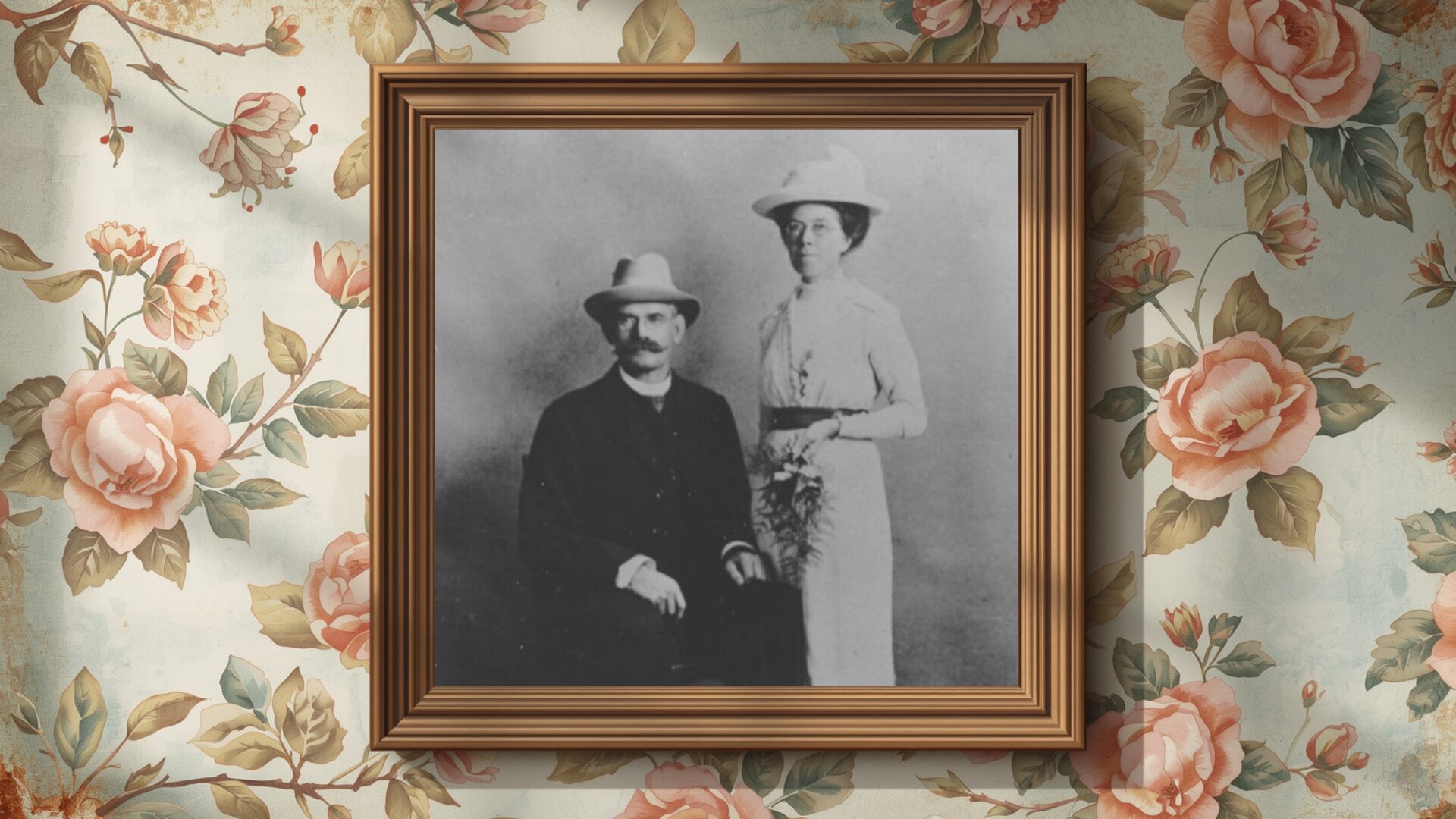
Few missionary couples from the early 1900s had such an impact as Charles and Mary Ellen Paap. For nearly three decades they travelled from town to town across New Zealand, Australia and South Africa to spread the Adventist message with boldness, resilience and unwavering faith.
Born in Kaikoura, New Zealand, in 1873, Charles Paap first encountered Adventism when a literature evangelist placed The Great Controversy in his family home. The book created quite a stir and his mother’s curiosity soon led her to begin keeping the Sabbath. In 1892, Charles and several of his family members were baptised following public meetings and personal visits by Pastor Stephen McCullagh.
After training for ministry in Melbourne, at Avondale University and later at Healdsburg College (now Pacific Union College) in the United States, Charles began his ministry in New Zealand in 1899. In 1900 he married Mary Ellen Nash in Auckland, beginning a partnership that would see them give 27 years of devoted service to pioneering Adventist work across a wide and often challenging territory.
The Paaps’ early work in New Zealand focused on establishing an Adventist presence in cities and towns across both islands. Beginning in Christchurch and then Dunedin, they faced public indifference and sometimes hostility, even personal threats of violence. Despite this, they persevered, advertising public meetings in the local paper and faithfully sharing their message. Their efforts eventually resulted in a small church of 28 members and the construction of a chapel.
Their mission strategy was simple but effective. They would pitch a mission tent in a central urban location and from there travel to nearby towns and villages visiting people in their homes and speaking about Christ’s soon return. They often joined locals in everyday activities like helping with farm work as a way to open doors for spiritual conversations.
Using this approach, the Paaps worked throughout New Zealand in towns such as Dannevirke, New Plymouth, Waitara and Stratford. When they were called to Australia, they continued the same method of evangelism throughout New South Wales, in Newcastle (1911), Muswellbrook (1912), Quirindi (1913), Tamworth (1914) and Manilla (1915). They encountered strong opposition and threats of violence, and long stretches away from home sometimes meant camping by the side of the road and cooking meals over an open fire.
In 1916 they received an invitation from the General Conference to take up evangelistic work in South Africa. There they continued the same travelling ministry, moving from town to town and persevering through opposition. During this time they also travelled to Zimbabwe, where Charles became the first Seventh-day Adventist minister to publicly proclaim the Adventist message in that country.
After six years in South Africa, the Paaps returned to New Zealand and continued their evangelism and ministry in cities and towns across the North Island. Mary’s own words captured their heart: “Our hearts are hungry for souls. We’ll gladly live anywhere, in anything, if only the dear Lord will give us some fruit for the labours expended.”
Looking back on their years of travel and evangelism, Charles summarised their remarkable journey: “My wife and I . . . have lived in 55 different cities, towns and villages . . . worked in 57 missions . . . have conducted 18 missions by ourselves and have been associated with 82 other workers in carrying on the remaining 39 missions
. . . only two of those efforts produced no direct results. Of the 57 missions mentioned, 50 have been pioneer efforts in virgin territory.”
In 1940 Charles died after a motorbike accident returning from a camp meeting. Mary passed away eight years later. Though they had no children of their own, their decades of sacrifice made them spiritual parents to many, with churches established across continents and generations as part of their legacy.
Ross Goldstone, adapted from ESDA.