For Greater Sydney Conference volunteer Meri Mohandas, serving during the Solomon Islands for Christ campaign has meant much more than helping with nightly evangelistic meetings.
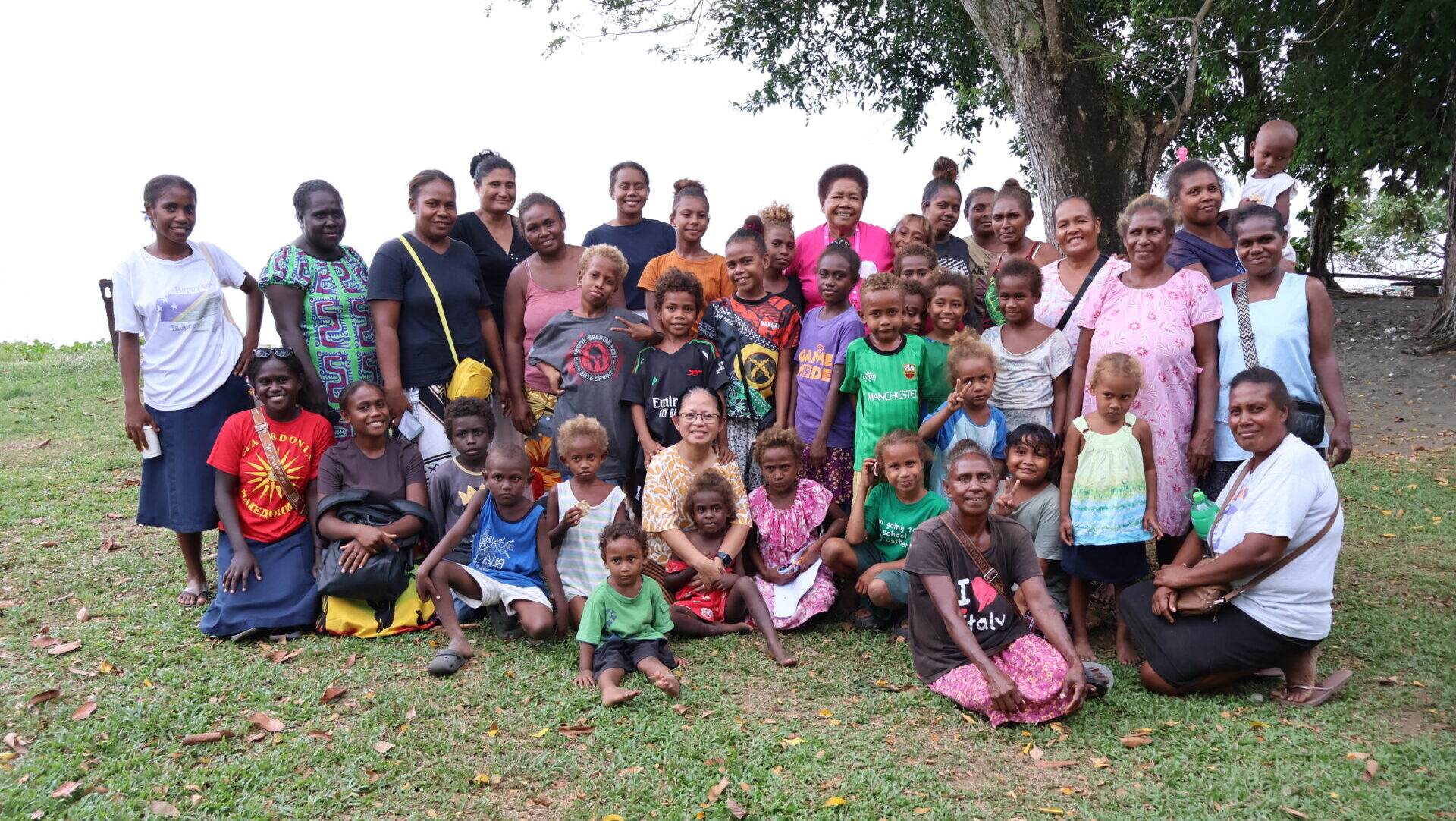
Together with other members of the Conference’s women’s ministries team, Mrs Mohandas spent two weeks at Kurivulu Seventh-day Adventist Church during the Solomons for Christ campaign, visiting families, running a Vacation Bible School program for children and teaching local women how to prepare nutritious meals using readily available ingredients.
Originally from Fiji, Mrs Mohandas has lived in Australia for 40 years and attends the Kema Fijian Seventh-day Adventist Church in Sydney. She was one of 13 women’s ministries volunteers from the Greater Sydney Conference who travelled to the Solomon Islands for the campaign, with three assigned to Kurivulu. Each morning, the volunteers travelled to the church before joining local women on visits throughout its five surrounding zones.
“We visit about six families each day,” Mrs Mohandas said. “The women from each zone take us to visit people who used to come to church, as well as widows, single mothers and families who are struggling.” Over the two weeks, the team visited more than 20 families.
Mrs Mohandas said one of the most striking features of the community was the number of women caring for children without a husband or father present. “In almost all the places we visited, it was only women and their children. That’s the one thing I found very interesting—there are more women than men,” she said.
“As you drive in, you’ll see a little stall where they are selling betel nut. There’s a lot of unemployment here and a lot of children. There is a lot of separation in families. You can see that there is a real need for support.”
Local minister’s wife and former Kurivulu schoolteacher Catherine Carver said many women in the area faced considerable financial and family pressures.
“Most of the women we visited were raising their children alone, and they were struggling,” Mrs Carver said. “The fathers of the children had married their mothers, then left them and married someone else. Often, these mothers are left with the responsibility to feed their children and sometimes their grandchildren on their own.”
She said family violence was also a serious concern in the community, particularly for women and children. In her former role at a local Adventist school, she encountered students who were frightened because of threats and violence toward their families.


Alongside the home visits, the volunteers organised a Vacation Bible School-style children’s program at the church. The activities provided Bible teaching, games and a safe place for the large number of children living nearby to gather. The team brought balls, craft materials and other resources from Australia for the children.
“We brought a lot of things from Sydney to give away to the children,” Mrs Mohandas said. “There were soccer balls and volleyballs so the children in the church and community could enjoy them.”
The volunteers also held practical cooking demonstrations for local women. Rather than introducing expensive or unfamiliar foods, they concentrated on ingredients that could be grown or obtained locally.
“We noticed there were a lot of bananas in the area, and some of the fruit was being wasted,” Mrs Mohandas said. “We wanted to teach people how they could use what was available.”
The team demonstrated new ways to prepare bananas and pumpkins, both of which grow readily around local homes. Mrs Carver said the demonstrations had allowed local women to learn useful skills while building friendships with the visiting volunteers.
“It was a blessing to work with Meri and the team,” she said. “We did prayer walks, visitation and cooking. They came with many skills and shared them with the women here.”
Minerva Sindac-Lebmeier, another volunteer, shared her expertise for cooking banana blossom. “They don’t eat [banana blossom], so we just see it lying everywhere,” she said. “In my country [the Philippines], we cook it. So, we showed them how. Now they know how to make banana blossom patties.” Mrs Sindac-Lebmeier then demonstrated how they cut the banana blossom, boil it, then mix it with seasonings, onion, garlic, egg and flour.
For Mrs Mohandas, the campaign demonstrated that mission includes both public preaching and personal acts of care. One experience that stayed with her occurred during a visit along an isolated, dusty road. The volunteers passed a man sitting beside the road and greeted him, but continued walking. As they moved away, he called out a single word: “Prayer”.
“We stopped and prayed with him in the middle of the road,” she said. “The sun was beating down and we were hot, but it reminded us to pause and remember people we might otherwise overlook.”
The evening meetings at Kurivulu attracted an estimated 250 to 300 people each night. During one appeal, 17 people indicated that they wanted to prepare for baptism. Mrs Mohandas said the response was encouraging, but the relationships formed through the children’s activities, cooking programs and family visits had been equally meaningful.
“When people saw us coming to visit them, it brought joy to them, and it was a joy for us as well,” she said. “It has shown me again that we need to take time to see people, listen to them and pray with them.”
Mrs Sindac-Lebmeier said, “It’s a once-in-a-lifetime experience; we think that we are blessing people but I’ll go home more blessed. They are very humble here. It has taught me a lot. God gave this opportunity to teach me about humility and just depending on Him.”
On preaching, she reflected: “I couldn’t imagine myself doing that but for 14 days, I have totally had to depend on God. Every time I go on that stage, I always say, ‘Lord take over, it’s not me anymore, it’s not about my presentation, it’s You.’ It’s very humbling.”