“All shall be well, and all shall be well, and all manner of thing shall be well.” This is my mother’s favourite quote, and growing up I heard it often. Distraught over one thing or another, I didn’t always appreciate it. In hindsight, though some of those situations still sadden me, it really did all turn out okay in the end. I guess my mother was right all along.
I always thought she was quoting the Bible. Turns out, it was actually Julian of Norwich.
Julian of Norwich lived in a very challenging time to be able to declare that all shall be well. Born in 1342 in England, she lived through the Black Plague, many turbulent years for the Catholic Church following a schism and the pronounced suffering of the English people due to war against France. She chose to live permanently in a cell, as a recluse, to dedicate her life to prayer and study. Through her writing came the unshakeable belief that despite suffering, the love of God prevailed. It was here she penned the famous words “All shall be well . . .”
This phrase has an optimism that can be hard to stomach, especially if someone is truly suffering. But the thing is, “All shall be well” does not minimise or make light of suffering. It does not mean that our grief always has a happy ending; it’s no prosperity gospel. The optimism of “All shall be well” stems from the knowledge that despite all we face, God’s love for us is eternal, as Jeremiah 31:3 says, “I have loved you with an everlasting love; I have drawn you with unfailing kindness”, and that any situation, no matter how dire, can be turned into something not necessarily good itself, but something used for good.
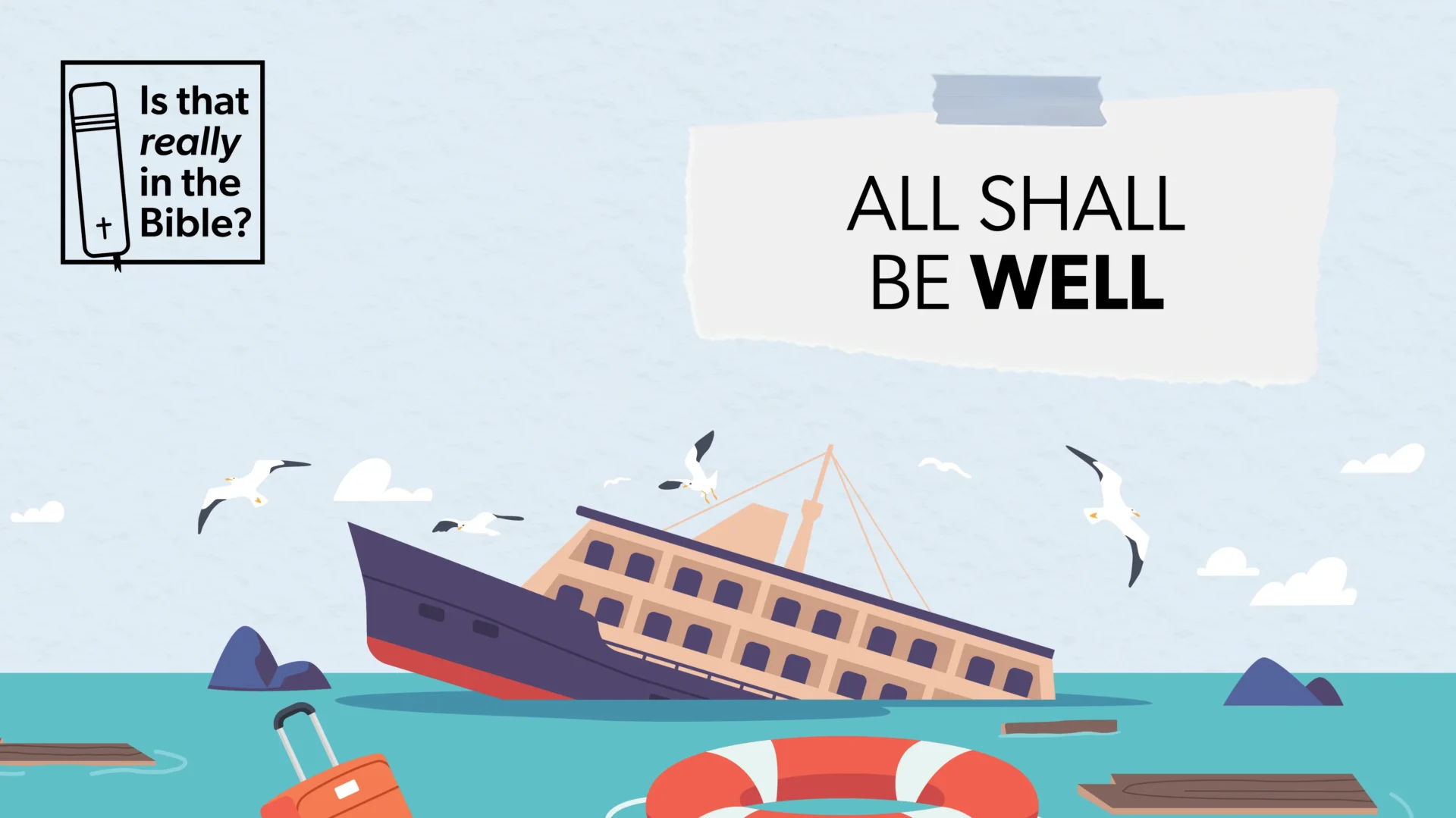
Horatio Spafford, the man behind the hymn “It is Well” lost his four daughters in a shipwreck, yet he was able to pen the hauntingly beautiful words, “When sorrows like sea billows roll; Whatever my lot, Thou has taught me to say, It is well, it is well with my soul.”
I have not suffered to the extent that either of these people have. It’s easy for me to say “All shall be well” and “It is well with my soul”. To read the stories of the lives of those still able to pronounce such sentiments is humbling.
This topic makes me think of a verse I have often wrestled with, Isaiah 43:2: “When you pass through the waters, I will be with you; and when you pass through the rivers, they will not sweep over you. When you walk through the fire, you will not be burned; the flames will not set you ablaze.”
That doesn’t always feel true. Spafford’s children died in the waters, the very “sea billows” that he wrote about. The fires of our life come hot and fast and they hurt. But this verse isn’t literal—it’s more “big picture”. Because of sin, we suffer. For now, there is no way to avoid that. We have to hold onto the promise that whatever happens we have the assuredness of being loved and being a part of a larger, eternal plan. “All shall be well” doesn’t mean everything we go through will turn out well in the end, but that despite everything we go through we have Someone who cares for us so deeply that He laid down His life for us.
What is perhaps less well-known about the story of Horatio Spafford is that he wrote those words three years after his loss. And that’s the other side of “All shall be well”: time heals pain. And while grief may not ever fully go away, once we’re through the worst we can see how God was with us through the entire process, and we can hold onto the promise that one day, He will wipe away all our tears.
When life feels impossible, that’s worth holding onto.
Ashley Jankiewicz is an assistant editor at Adventist Record