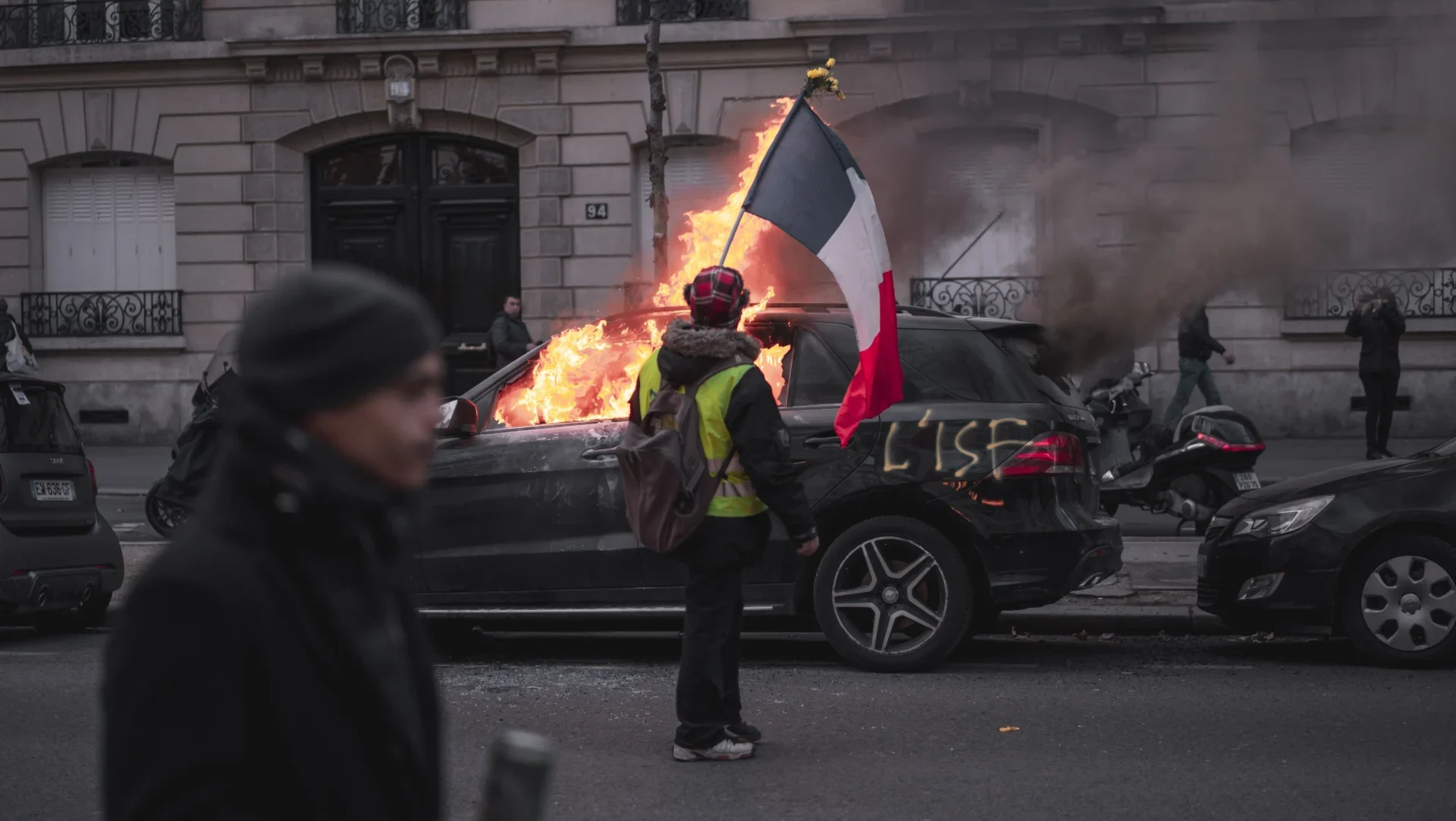
“La hont et la colère”—“the shame and the anger”. Those were the recent words on the front page of French newspaper Le Figaro at the shocking riots happening across France. Smashing, looting and vandalism has engulfed France over the past few months, but that’s only one part of the puzzle. The price of fuel globally has gone through the roof, thanks to a war in the Middle East whose origins and future resolution are unclear. The war in Ukraine rages on. Israel is still dropping bombs on Gazan children, with the true fate of many of the hostages taken by Hamas remaining unknown. Closer to home, the Australian Bureau of Statistics recently revealed that, taking inflation into account, Australian wages are back where they were in 2011. Emigration out of New Zealand recently hit the highest it’s been in 13 years. A recent report found that Pacific nations spend between 10 and 25 per cent of their GDP on fossil fuel imports, which is more than the (on average) 8 per cent they spend on education and the 6 per cent they spend on healthcare. No matter where you are in the Pacific, unless you sit at the very top end of the tax bracket, you are feeling the pinch and the unrest that comes from it. The question is, what can be done about it?
Some point to the economy: fix that, and all the other problems will go away. Certainly, if that happened, it would solve many material problems. But would it fix the systemic issues our world presently faces? I’m not so sure. As pressing as our current cultural moment may be, the reality is, humanity is sick with a disease that can’t be cured by a bigger bank balance. Faced with that reality, we can either give in to nihilism, or we can take Jesus’ perspective.
In Jesus’ Sermon on the Mount, He famously tells His hearers not to “worry about your life, what you will eat or drink; or about your body, what you will wear . . . Look at the birds of the air; they do not sow or reap or store away in barns, and yet your heavenly Father feeds them. Are you not much more valuable than they?” (Matthew 6:25,26)
First, Jesus challenges His listeners’ perspective on worry. The word He uses is merimnaó, which means “concerned, worried, anxious”. Concern can be good, especially when it comes to things we can control, but too often we worry about things we can’t control—the weather, other people or just the future in general. Rather than solving our problems in the future, worry too often steals our peace in the present.
Second, Jesus is dissuading us from slipping into cynical nihilism. Jesus tells His listeners to first consider the birds of the air, then the flowers of the field; objects of beauty that do nothing to sustain themselves outside the behavioural patterns their Creator has set for them. “Are you not much more valuable than they?”Jesus defines anxiety and fear as unnatural and that the natural posture humans were created for is that of trust—trust that God will provide what we need, because of how valuable we are to Him.
As Christians, we should be concerned for the world. We should care about inequity, injustice and greed. All these are symptoms of a world desperate for the day when “the haughty looks of man shall be brought low, and the lofty pride of men shall be humbled, and the Lord alone will be exalted” (Isaiah 2:11). Concern for our fellow humans and our world should motivate us to advocate for those without voice and hold to account those who use their power for selfish means.
But the biblical perspective also is a reminder that there is more to this world than this world—that there is a day coming when all will be made right and, ultimately, justice belongs to God. “Therefore, do not worry about tomorrow, for tomorrow will worry about itself. Each day has enough trouble of its own” (6:34).