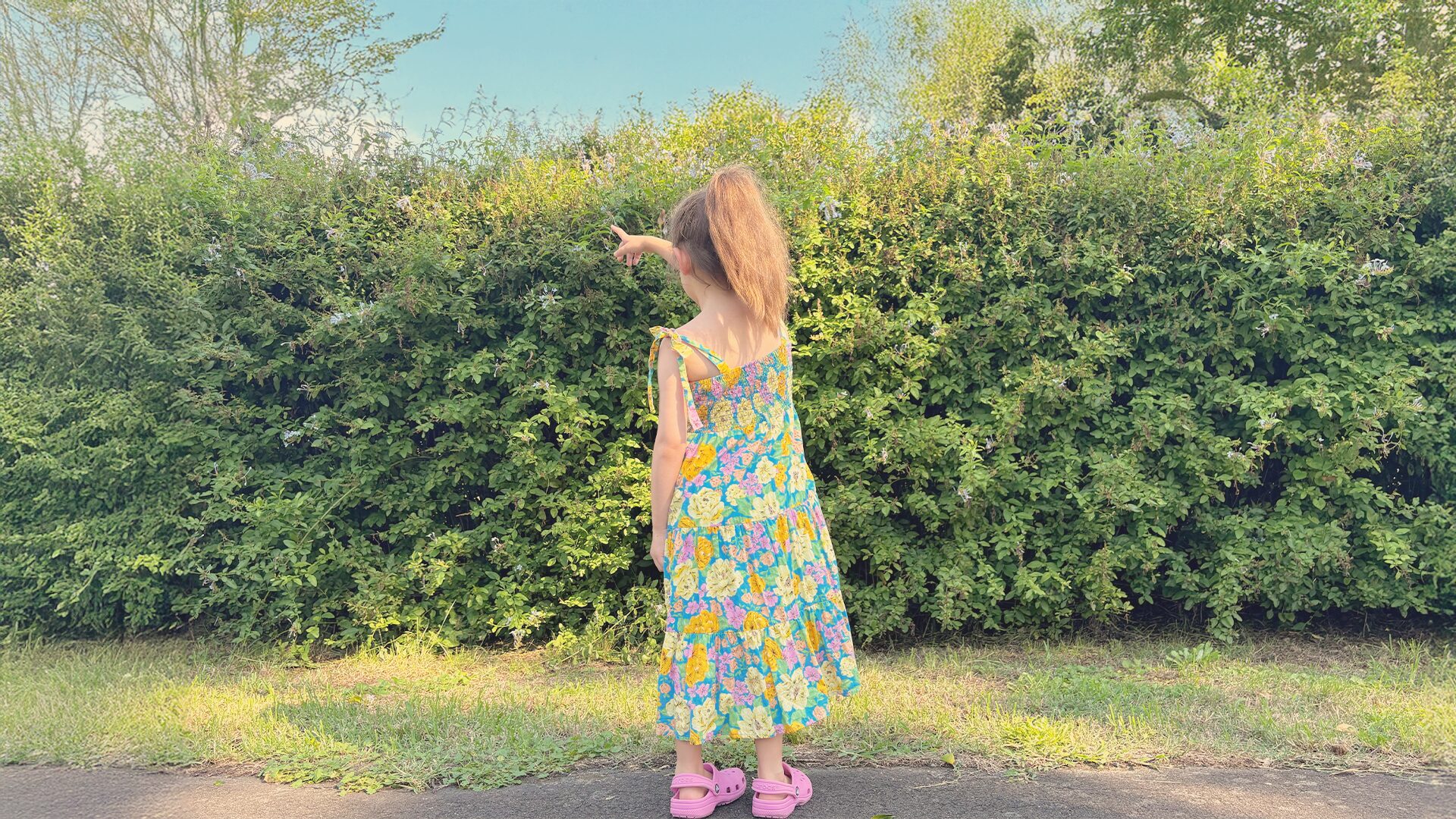
Yesterday it rained heavily all day. It eased just enough at bedtime for a walk with my daughters down our driveway to check the mailbox. As we went past the neighbour’s fence, their dogs came barking to greet us. As an avid dog-lover, my one-year-old squealed in excitement and veered off the path to greet them. Further down the road, my five-year-old stopped in front of an overgrown hedge with blue flowers and asked with deep concern why all the flowers had suddenly died. When I explained that it was because of the heavy rain, she asked, “But how come none of the other flowers have died?”, gesturing at a few other plants that looked less droopy. I had no answer. To be honest, I hadn’t even noticed the appearance of the plants we’d walked past.
Children often have a way of seeing what we, as adults, miss. The colours in a sunset are the prettiest thing they have ever seen, a bug on the ground is so fascinating that they need to stop and watch it, and a glimpse of the moon during the daytime can completely blow their mind. They naturally seem to notice what is in front of them and allow it to affect them. I, on the other hand, am usually moving too quick to linger. Life is busy with parenting, working, caring, thinking, doing, being. From the moment I wake up I am trying to fit the most into the least amount of time possible. I’m paying attention, but not to the small things. On the never-ending to-do list, pausing to watch a sunset does not feature. Somewhere along the way efficiency became more important than wonder.
Since becoming a mum and watching the way my daughters experience the world, Matthew 18:3 has often come to mind: “Truly I tell you, unless you change and become like little children, you will never enter the kingdom of heaven.” I think of my daughter’s unfiltered prayers, her surprisingly big questions about God and the certainty with which she talks about how much He loves her. What if becoming more childlike is not about being more simplistic, but about recovering trust, openness and wonder? What if it is about slowing down enough to notice again?
The problem is that I can decide to be more present and attentive, only to find myself rushing again the next day. But God has built a pause into our week. In Genesis 2, after creating the world, instead of rushing ahead to the next task, He stops. He blesses the day and declares it holy. Sabbath is a practical interruption to the adult instinct to measure everything by output. As Eugene Peterson writes, “Sabbath is that uncluttered time and space in which we can distance ourselves from our own activities enough to see what God is doing.” It’s a weekly chance to stop focusing on productivity and instead make space for presence. When we stop producing and pushing to do more, then we can finally pause to notice and delight. We remember we are not machines, but children of a God who wants us to experience wonder.
The sun came back out again today, so I went for another walk with my girls. As we walked down the driveway past the overgrown hedge my daughter exclaimed with much happiness and relief, “Look Mum! The flowers are alive again!”. She had been sure the rain had ruined them, but nothing died. They were standing and still a shade of vibrant blue. All they needed was the sun to lift them up again.
As adults, we don’t lose our capacity for wonder, we just stop making room for it. We fill every minute of our day, cover the quiet with noise, move so fast that beauty flashes right by, and then wonder why childlike faith feels so distant. But Sabbath is God’s gift to us. A weekly reminder to step out of the race of life and remember who we are. We don’t become more childlike by trying harder, we become more childlike by stopping. It might be that the way back to childlike faith isn’t dramatic at all but simply making time to walk the driveway again and actually looking.