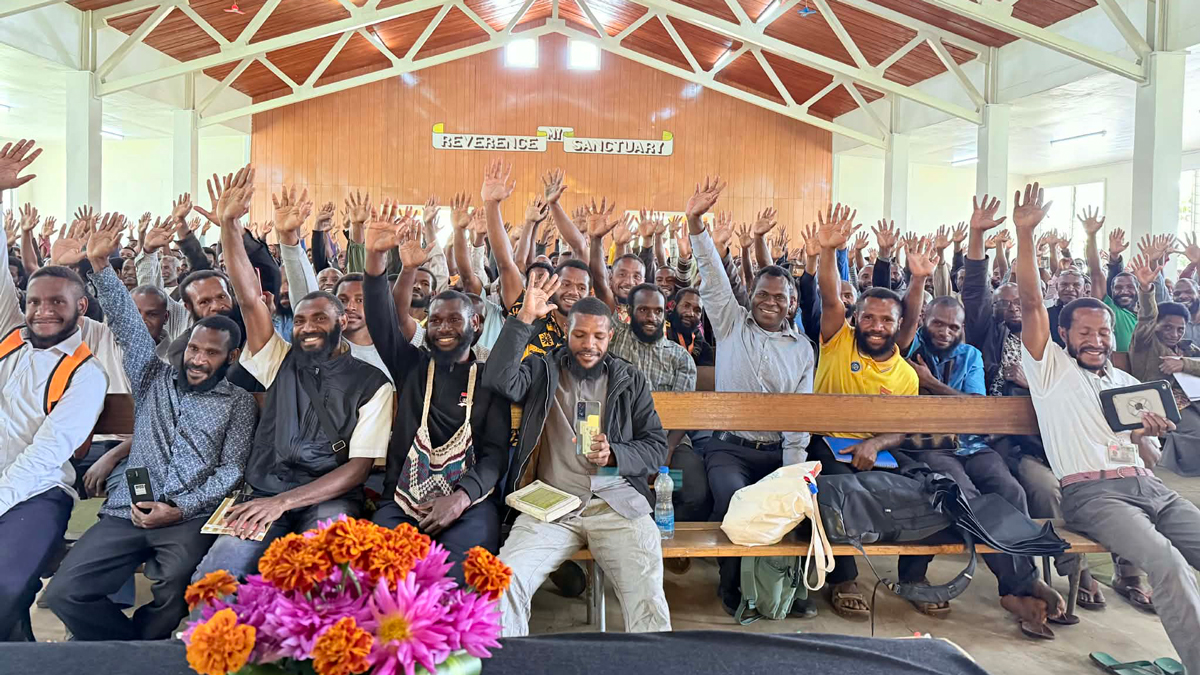
The Omaura Adventist School of Ministry in Papua New Guinea celebrated the graduation of 87 students in 2025.
Nestled in the Eastern Highlands near Kainantu at an altitude of approximately 1.4 kilometres, the institution has been equipping Seventh-day Adventist workers for mission since the early 1930s. Today, it remains one of five Adventist worker training institutions within the South Pacific Division.
The 2025 graduation formed part of a student body of around 200 enrolled last year. Graduates receive a Certificate in Ministry following two years of training designed specifically for the realities of rural ministry in Papua New Guinea. With more than 80 per cent of the nation’s population living in rural areas, the school plays a critical role in preparing pastors to serve communities where access to roads, healthcare and education can be limited.
Most of the graduates will be assigned to local churches throughout the country, while a few will continue their ministerial training at Sonoma Adventist College or Pacific Adventist University.
The graduation comes at a time of expanding mission opportunities. Following the 2024 PNG for Christ evangelistic initiative, churches in rural areas are experiencing growth, increasing the need for trained pastoral leaders who understand the cultural and logistical realities of village ministry.
Established originally to train workers in teaching, medicine and ministry, Omaura endured decades of challenge, including periods of tribal fighting and limited resources. Medical training was relocated to Sopas Adventist Hospital in the late 1960s, allowing the school to focus fully on ministerial training—a focus that continues to shape its identity today.
A notable development in recent years has been the steady growth in female enrolments. Approximately 10 per cent of last year’s graduates were women. However, leaders acknowledge that limited infrastructure—particularly accommodation—remains a barrier to expanding enrolments, especially for female students.
To address these needs, the first quarter 13th Sabbath offering on March 28 will support the school’s development plans, including new classrooms, dormitories and a multi-purpose hall. The vision is to strengthen training capacity not only for Papua New Guinea but also for neighbouring Pacific nations.