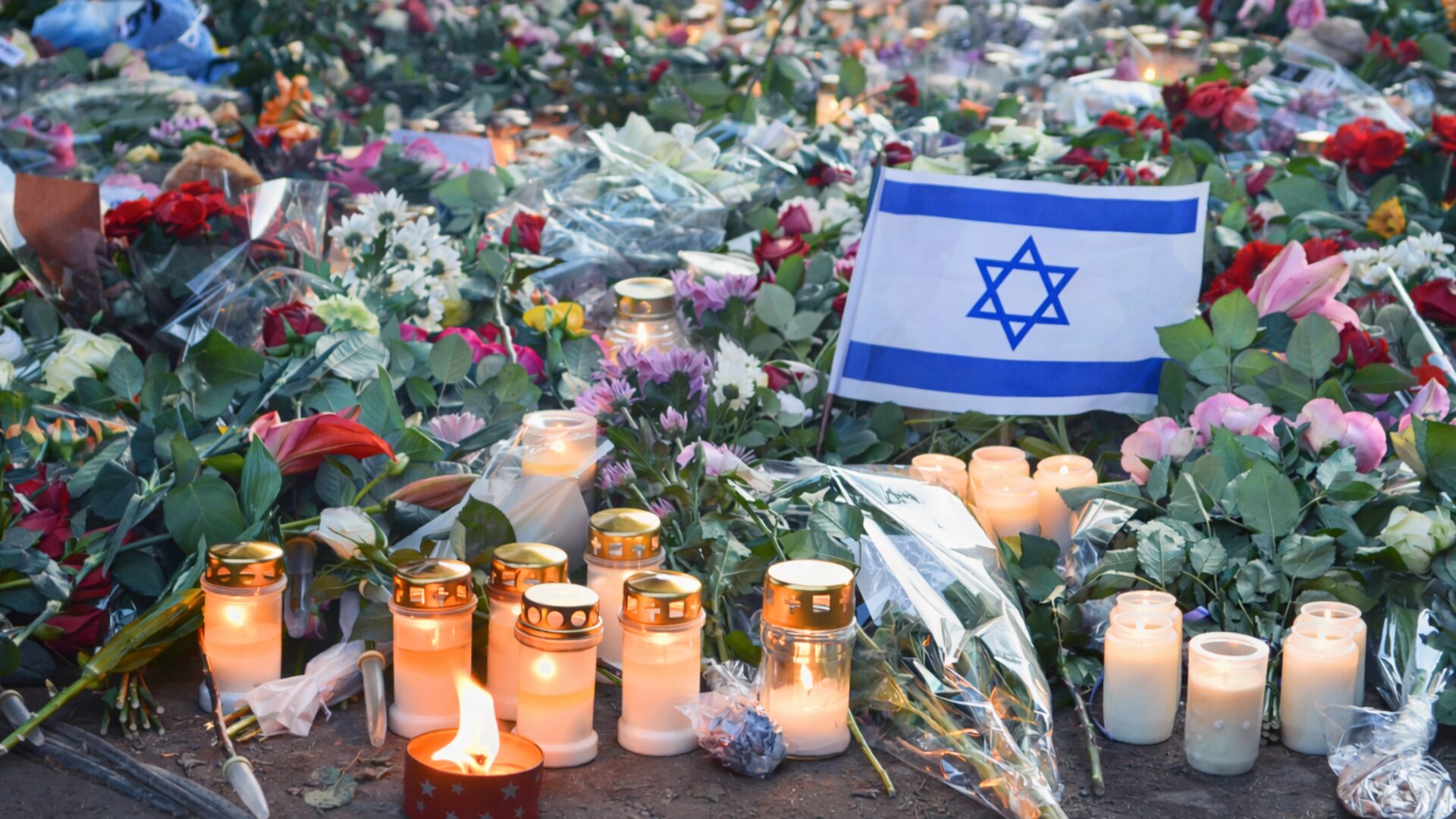
The recent violent events at Bondi have once again shaken Australia’s sense of safety. As has so often occurred following acts of public violence, grief has quickly given way to moral urgency. Governments have moved decisively to strengthen laws against guns, antisemitism and hate speech—steps that, in principle, are both understandable and necessary.
Antisemitism is not a minor social ill. It is one of the oldest and most persistent hatreds in human history. Any Christian response to current events must begin by acknowledging this reality with humility and honesty.
The Jewish people have endured millennia of sustained persecution. From the destruction of Jerusalem in AD 70, through medieval expulsions, forced conversions, ghettos, pogroms, and blood libels, Jewish communities across Europe and the Middle East were repeatedly scapegoated, marginalised, and brutalised.
The Holocaust stands as the darkest chapter of this history. Six million Jews—men, women, and children—were systematically murdered by a modern, bureaucratic state that harnessed law, science and propaganda in the service of genocide. This was not ancient barbarism; it was 20th Century Europe.
Australia, though geographically distant, is not morally removed from that history. Jewish refugees found safety here after World War II, and Australian society rightly carries a responsibility to ensure that such horrors are never repeated. Any resurgence of antisemitism—whether overt or subtle—must be confronted firmly.
Scripture itself reminds Christians that the Jewish people occupy a unique place in salvation history. “Salvation is of the Jews” (John 4:22). Jesus, the apostles, and the early church were Jewish. Hatred of Jews is therefore not only a moral failure, but a theological contradiction.
In the present day, and in light of recent events, strengthening protections for Jewish Australians is right. The law has a legitimate role in restraining violence, intimidation and incitement. Adventists, as a people who have benefited enormously from civil protections, should never oppose laws that genuinely safeguard life and dignity.
Yet history also teaches us to examine not only what laws are introduced, but how they evolve.
Laws introduced during moments of crisis tend to expand quietly over time. Categories blur. Definitions widen. What begins as protection against violence can become regulation of speech; what begins as speech regulation can drift toward policing belief.
This is not an accusation of malice. It is a pattern—one observed repeatedly across history.
Australia has a proud tradition of religious freedom. Section 116 of the Constitution reflects an early recognition that the state must not intrude into matters of conscience. Seventh-day Adventists in Australia have been strong beneficiaries of this principle—particularly in matters of Sabbath observance, military service and education.
Adventism itself was born in the crucible of religious liberty concerns. Our pioneers were acutely aware that majorities, even well-intentioned ones, can misuse moral authority when dissenting voices are marginalised. This awareness shaped our historic advocacy for freedom of conscience for all—not only for ourselves.
Ellen White warned that the final crisis would not come primarily through open persecution at first, but through moral persuasion, social pressure and legislation framed in the language of public good. Her concern was not tyranny, but incremental coercion.
Biblical prophecy—particularly in Daniel and Revelation—uses symbolic language to critique systems of power. The “beasts” are not ethnic groups. They are not Jews, Catholics, Protestants, or atheists as individuals. They represent historical movements and institutional alignments where religious authority and civil power merge to compel conscience.
This distinction is vital. Yet it is precisely this symbolic, historical critique that modern legal frameworks struggle to interpret.
In a climate rightly sensitive to antisemitism and religious hatred, there is a growing risk that system-level theological critique may be misunderstood—or deliberately mischaracterised—as hate speech. Terms long used within Protestant and Adventist tradition may be viewed through contemporary political lenses rather than historical or theological ones.
The challenge for Adventists is therefore not whether prophecy remains true, but how it is articulated responsibly in a changed legal and cultural environment.
History reveals an instructive progression.
In medieval Europe, blasphemy laws protected God—or rather, the state’s interpretation of God. In modern democracies, hate-speech laws protect people, particularly minorities who have suffered grievously. Increasingly, however, we see a third category emerging: laws designed to protect social cohesion and unity.
Unity is not a biblical evil. Jesus prayed for it. But enforced unity—especially when it suppresses conscience—has always been the seedbed of persecution.
The book of Revelation does not depict a future of rampant atheism, but of coerced conformity. Religion is permitted—so long as it does not disturb consensus.
Rome did not initially persecute Christians because they were immoral or violent. It persecuted them because they were seen as socially disruptive. They refused to participate in state-sanctioned religious acts that symbolised unity and loyalty.
That lesson should sober us. Restrictions on conscience rarely announce themselves as such. They are introduced as reasonable, protective, and compassionate.
How, then, should Australian Adventists respond?
Not by resisting laws that protect Jewish communities from harm. Not by careless or provocative language. Not by silence born of fear.
But by recommitting ourselves to genuine opposition to antisemitism in all its forms; careful, historically informed use of prophetic language; principled defence of religious liberty for everyone, and; Christlike humility in tone, without surrender of conviction.
Prophecy must never be used as a weapon. But neither must it be edited into irrelevance.
The narrowing of conscience does not arrive suddenly. It emerges quietly—through tragedy, fear, moral urgency and laws passed with sincere intentions.
As Seventh-day Adventists in Australia, we are called to hold two truths together:
the absolute necessity of protecting Jewish people from hatred and violence, and the equally vital need to preserve freedom of conscience in a pluralistic society.
Doing both requires wisdom, historical memory, and above all, the Spirit of Christ.
Now, as much as ever, discernment matters.
Dr Robert H Granger is a dermatologist in Bunbury, WA.