When I recently travelled to Kikori in Gulf Province, Papua New Guinea, aboard an Adventist Aviation mission plane, I looked forward to spending the Sabbath with our church family. I returned with a grateful heart, encouraged by their welcome, their commitment to God and their joyful expectation of Jesus’ soon return.
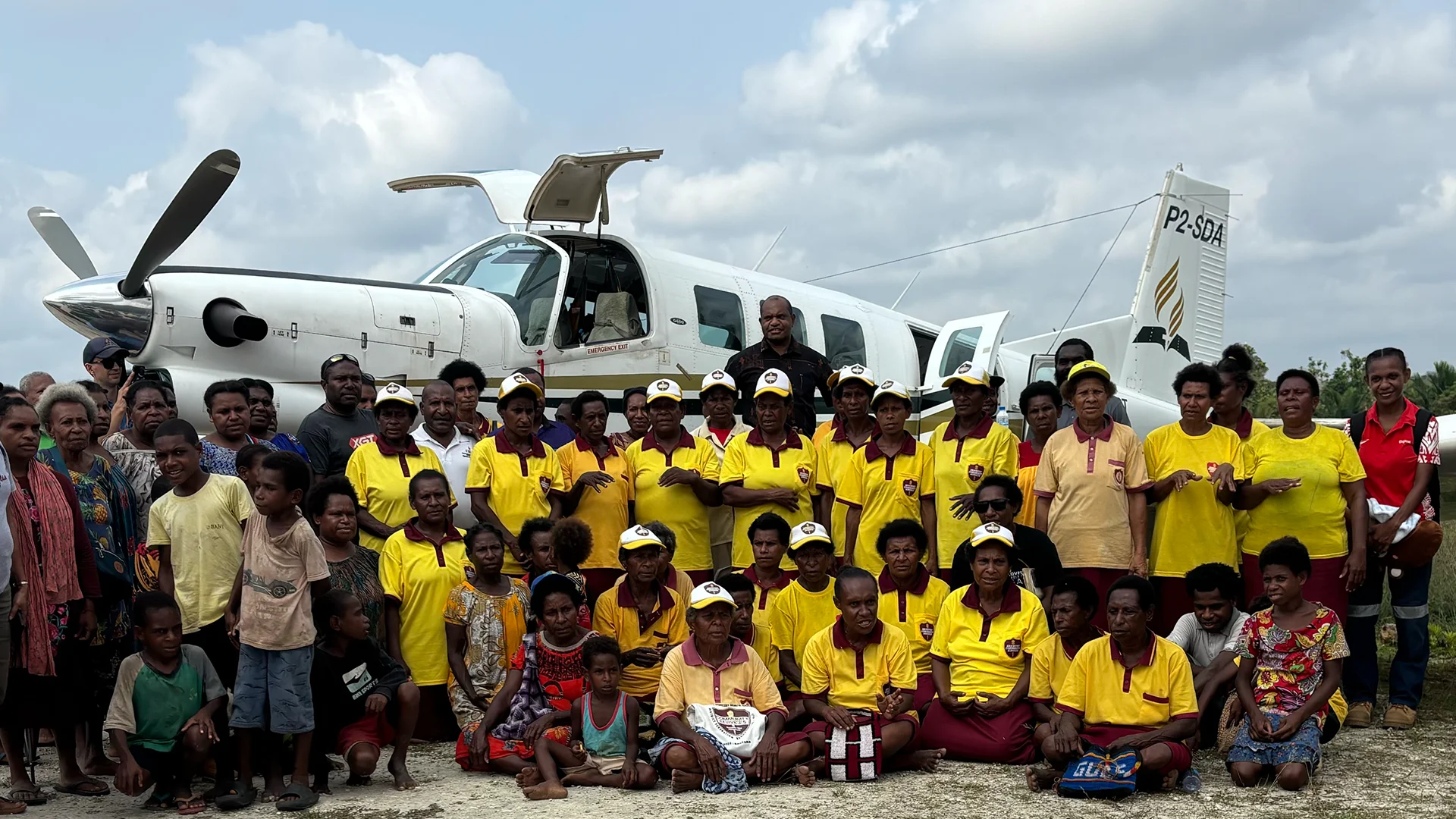
Kikori is a place where geography shapes daily life. Winding rivers, extensive swamps and dense forests create significant challenges for travel, communications and other basic services. With limited road connections, many communities depend on waterways, making it difficult to reach services and gatherings. Yet amid these geographical challenges, faith continues to flourish. In this setting, our mission aircraft provides a precious connection. For our church members, its arrival also carries a deeply personal meaning. When our plane landed, their joy was unmistakable. Some began singing jubilantly, “Flying Missionary Plane”, while others proudly told us, “We contributed K10.00 to purchase this plane!”. Their words touched me deeply. They remembered their part in making this ministry possible. Their giving connected them to every journey the aircraft made in service to others. They welcomed it as their missionary plane, a shared expression of faith and commitment to God’s work. Their response reminded me that participation in mission begins with a willing heart. We may never pilot an aircraft, but through our prayers, offerings and service, we can help carry the gospel to places we may never visit. God receives what we offer and uses it beyond what we can see.
Kikori also holds a significant place in the history of Adventism in Papua New Guinea. It is one of those places where the Church’s presence was particularly strong in earlier years. Visiting stirred gratitude for those who served faithfully, shared the gospel and nurtured believers through difficult circumstances. Their legacy invites us to renew our commitment to the mission entrusted to us today. As we gathered for worship that Sabbath, I was deeply encouraged by the faith of our people. Their commitment to God remained strong amid the challenges of their surroundings. Together, we worshipped the Lord who knows every village, every family and every struggle. Their hope reached beyond their immediate circumstances. They were looking forward to seeing Jesus return. I found myself reflecting on the welcome we had received. If the arrival of a missionary plane could inspire such joyful singing, what will it be like when our Saviour appears in the clouds of heaven? How wonderful it will be when these faithful believers lift their eyes and see the One they have loved, trusted and awaited!


That Sabbath challenged me personally. Do I await Jesus with the same joyful expectation? Does my giving reflect the same willingness to participate in His mission? Do I treasure opportunities to worship with God’s family? I left Kikori thankful for the privilege of being among these receptive, generous, faithful people. Their faith and hope renewed my appreciation for the Church as a worldwide family, united by one Saviour and one blessed hope.
Along remote rivers, beyond swamps and forests, on isolated islands, in villages and throughout our towns and cities, God’s people are present everywhere, faithfully awaiting the soon return of our Lord. One day, we will gather together before Him, and no distance will separate us again.
“After this I looked, and there before me was a great multitude that no-one could count, from every nation, tribe, people and language, standing before the throne and before the Lamb. They were wearing white robes and were holding palm branches in their hands” (Revelation 7:9).
This verse pictures God’s redeemed family gathered before Jesus, united across cultures, languages and nations. For believers in Kikori and throughout the world, it affirms that salvation embraces people from every background. When Jesus returns, His faithful children from every background will rejoice together, sharing one hope and worshipping their Saviour forever.